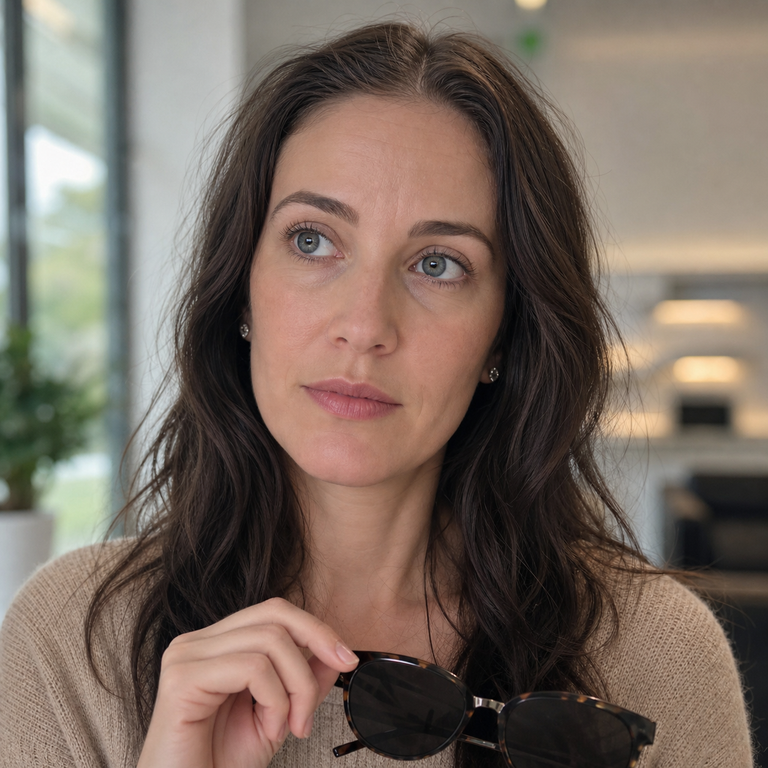
You step out of the exam room into a bright lobby, reach for your sunglasses, and discover that the text on your phone has turned soft around the edges. If you arrived wearing colored contacts, it is natural to wonder whether putting them back in would make the blur go away.
The short answer: wear colored contacts again only if the clinician who examined you says it is appropriate, your exam did not reveal a reason to avoid lenses, and your vision and comfort have returned to normal. There is no universal wait time after dilation. If you were told to keep lenses out for the rest of the day, had other drops or procedures, or still have blur, glare, irritation, or trouble handling a lens safely, leave them out. Dilation blur is not a focusing problem that a colored contact can reliably fix, and reinserting a lens just to counter it is not a safe shortcut.
Why dilation makes the world look unusually bright
During a dilated eye exam, drops widen the pupil so the clinician can examine structures inside the eye. The National Eye Institute explains how the pupil and iris control the light entering the eye. With the pupil held wider than usual, more light gets in. The same drops can temporarily interfere with near focusing, which is why a phone, receipt, or dashboard may look blurry even when distance vision seems less affected.
The NEI says vision may be blurry and eyes may be light-sensitive for a few hours after a dilated exam. Individual recovery varies with the drops used, eye color, age, dose, and personal response. That variation is one reason a fixed rule such as “wait exactly two hours” does not work for everyone.
Bring sunglasses, reduce screen brightness, and give your near vision time to settle. NEI guidance also supports arranging a ride home because post-exam blur and glare can make driving unsafe. If you did not arrange transportation and cannot see clearly, call someone, use a taxi or rideshare, or wait at the clinic until you can discuss a safe plan. Walking into bright sunlight can also be uncomfortable, so pause in the lobby, put on your sunglasses, and let your eyes adjust before heading outside. Do not drive because the clock says enough time has passed.
No universal clock: use a readiness decision instead
A dilation visit may be simple, or it may include pressure checks, retinal imaging, staining, treatment, or a finding that changes what you should do next. Your examining clinician knows which drops and procedures were used. Their instructions outrank any general timeline online.
This table is a decision aid, not a substitute for those instructions:
| Situation | What to do about colored contacts | Reason |
|---|---|---|
| Before or during the exam | Remove lenses when the clinic asks and store or discard them as directed. | The clinician may need an unobstructed view, accurate measurements, or a clean ocular surface. |
| Immediately after dilation | Keep lenses out while vision is blurry, light is uncomfortable, or your hands cannot manage insertion confidently. | A lens does not reverse pupil dilation, and poor visibility makes safe handling harder. |
| A few hours later, symptoms resolved | Consider wear only if the clinician gave no restriction and the lens is prescribed, clean, undamaged, and within schedule. | Comfort and normal vision are practical readiness checks, but clinical advice still comes first. |
| Told to avoid contacts for the day or longer | Follow that instruction, even if you feel normal sooner. | The restriction may relate to an exam finding, surface irritation, another medication, or a procedure. |
| Persistent pain, redness, discharge, marked blur, halos, nausea, or worsening symptoms | Do not insert a lens. Contact the clinic promptly or seek urgent care as directed. | These are not symptoms to cover up with a contact lens. |
Notice that the table does not promise a two-hour, four-hour, or next-morning answer. “Ready” means more than elapsed time. You need clear enough vision to handle the lens, comfortable eyes, no contrary exam instruction, and no warning symptoms.
Four things that are easy to confuse
Dilation drops widen the pupil and may temporarily blur near vision or increase light sensitivity. They are used to help examine the inside of the eye. They do not test whether a colored contact fits.
A contact lens exam or fitting evaluates measurements, lens movement, vision, comfort, and eye response. A routine dilated exam and a lens fitting may occur at the same appointment, but they answer different questions. If this distinction is new, read what happens during a contact lens fitting and the guide to eye exams for colored contacts.
Routine lens wear means following the prescription, replacement schedule, cleaning method, and wearing limits given for that lens. The FDA identifies soft and rigid gas-permeable lenses as the two general contact lens categories and states that all contact lenses require a valid prescription. “Colored” describes appearance, not a separate exemption from medical-device rules.
Symptoms that need care are not routine post-dilation inconvenience. Mild blur and light sensitivity can be expected for a limited period, but significant pain, increasing redness, sudden visual loss, vomiting, severe headache, or symptoms that worsen rather than improve deserve prompt professional guidance.
Why putting contacts back in will not cancel dilation blur
A prescribed contact lens corrects a refractive error by changing how light is focused. Dilation drops create a different temporary situation: a widened pupil and, depending on the drop, reduced near-focusing ability. Even a lens with the correct power cannot make the pupil constrict on command or restore the focusing response disabled by the medication.
A colored lens with no vision correction cannot sharpen a blurry phone at all. A powered colored lens may correct your usual nearsightedness or farsightedness, yet still leave post-dilation near blur and glare. If vision becomes unexpectedly blurry only while wearing the lens after recovery, remove it rather than assuming dilation is still responsible. The troubleshooting guide on why colored contacts can look blurry explains other possibilities, including fit, deposits, dryness, rotation, and prescription issues.
Glasses are the simpler backup on exam day because they do not sit on the eye and can be removed easily. They may correct your ordinary prescription while your pupils recover, though they may not eliminate medication-related near blur. You can also pair prescription glasses with non-prescription cosmetic lenses only when both parts of that plan have been approved for you; see how colored contacts and glasses can be used together.
What to do with the pair you removed
Follow the replacement schedule and care instructions for your exact lens. A daily disposable that has been removed should not be saved for later wear unless its labeling and your clinician explicitly allow that use. For reusable lenses, use the recommended fresh disinfecting solution and a clean case. Never top off old solution, rinse lenses with tap water, or put a lens in your mouth.
If a lens was dropped, dried out, torn, contaminated, or stored incorrectly during the appointment, discard it. Do not gamble on a questionable lens because the color matches your plans for the evening. Use a fresh prescribed pair when you are clinically cleared and fully recovered.
There is no need to claim that dilation drops chemically damage every contact lens. Clinics commonly ask wearers to remove lenses for examination quality, measurements, comfort, or because other drops and procedures may be involved. The correct handling instruction depends on the product, the appointment, and what touched the lens. Ask the clinic whether the removed pair may be reused.
Colored contacts are prescription medical devices
The FDA states that decorative contacts, including colored contacts, are medical devices and must be prescribed, even when they do not correct vision. An eye exam and a valid prescription are not paperwork for powered lenses alone. Fit matters because a lens that is too tight, too loose, or otherwise unsuitable can injure the eye.
Buy only the exact brand and parameters on a valid prescription from a seller that verifies it. Do not swap lenses with another person or buy a look-alike pair from a costume shop, beauty counter, street vendor, or seller that treats a prescription as optional. Yilala’s FDA compliance overview provides additional context on the US rules, but your prescriber remains the source for what fits your eyes.
Once your post-exam effects are gone and your clinician has cleared routine lens wear, you may browse the Earl Series colored contact lenses if that exact lens is consistent with a valid prescription. The link is not a claim that this product is suitable immediately after dilation or appropriate for every wearer.
A practical plan for your next dilated appointment
Call the office before the visit and ask whether contacts should be removed in advance. Some measurements are sensitive to recent lens wear, and the requested lens-free period can differ by lens type and purpose of the appointment. Bring your glasses, a current lens box or prescription details, a clean case if advised, fresh solution for reusable lenses, and sunglasses.
At checkout, ask a precise question: “When may I resume my prescribed colored contacts, considering the drops and findings from today?” If the answer is “when the dilation wears off,” ask what signs they want you to use. Clear distance vision alone may not mean your near focusing and light tolerance are back.
Test recovery in a safe place. Can you read your phone without strain? Can you move between indoor and outdoor light comfortably? Is each eye free of pain, unusual redness, discharge, or a new visual disturbance? Can you wash and dry your hands and inspect the lens clearly? If any answer is no, glasses and patience are the better choice.
When you do resume wear, wash and dry your hands, use a fresh or properly disinfected prescribed lens, and assess each eye separately. Remove the lens if you develop pain, increasing redness, discharge, or reduced vision. Do not sleep in it unless that exact lens is prescribed and approved for overnight wear, and do not extend wear to make up for time lost during the appointment.
When post-exam symptoms need a call
Expected dilation effects should trend toward improvement. Contact the examining office if blur or light sensitivity lasts longer than they told you to expect, if one eye behaves very differently from the other, or if you are uncertain whether another drop or procedure changes the plan.
Seek prompt medical attention for severe eye pain, marked redness, sudden or worsening vision loss, a curtain or shadow in vision, many new flashes or floaters, pronounced halos with headache, nausea or vomiting, swelling, or discharge. Do not insert colored contacts while waiting for advice. If a lens is already in, remove it if you can do so safely, unless a clinician tells you otherwise, and keep the lens or packaging if the office asks to inspect it.
The central rule is uncomplicated: do not use a contact lens to conceal or push through a symptom. Dilation recovery, lens fit, and eye disease are different issues, and each deserves the right response.
Frequently Asked Questions
Can I put colored contacts in right after a dilated eye exam?
Usually, you should wait until your clinician allows it and the blur, glare, and light sensitivity have resolved. Keep lenses out if you received a longer restriction or cannot insert them safely.
How many hours should I wait after dilation?
There is no universal number. Effects often last for hours, but the drops, procedures, exam findings, and your response matter. Follow the specific instructions from the examining clinic.
Will colored contacts make dilation blur clearer?
Not reliably. Dilation can affect pupil size and near focusing. A contact lens may correct your ordinary prescription, but it does not reverse the action of dilation drops.
Can dilation drops damage my colored contacts?
Do not assume they damage every lens. Remove lenses when asked, then check whether the clinic wants the pair discarded, disinfected, or kept out for a set period based on the products and procedures used.
Can I drive home wearing my contacts after dilation?
Do not drive unless you can see safely and the clinic has not restricted you. Contacts do not cancel dilation-related glare or blur. Arrange another ride when dilation is planned.
Should I wear glasses to a dilated eye exam?
Glasses are a useful backup. Ask whether to arrive without contacts, especially when the visit also includes corneal measurements, a prescription check, or a contact lens fitting.
What if only one eye is still blurry after the exam?
Keep contacts out and call the examining office for guidance, particularly if the difference is new, worsening, painful, or lasts beyond the expected recovery window they gave you.
When is it safe to shop for a new colored lens after dilation?
Shopping can wait until you have recovered, received any needed prescription or fitting, and understand the clinician’s instructions. Purchase only the prescribed brand and parameters from a seller that verifies prescriptions.
Official Sources
- National Eye Institute: Get a Dilated Eye Exam
- National Eye Institute: How the Eyes Work
- U.S. Food and Drug Administration: Decorative Contact Lenses
- U.S. Food and Drug Administration: Types of Contact Lenses
This article provides general education and does not replace instructions from the clinician who examined your eyes.