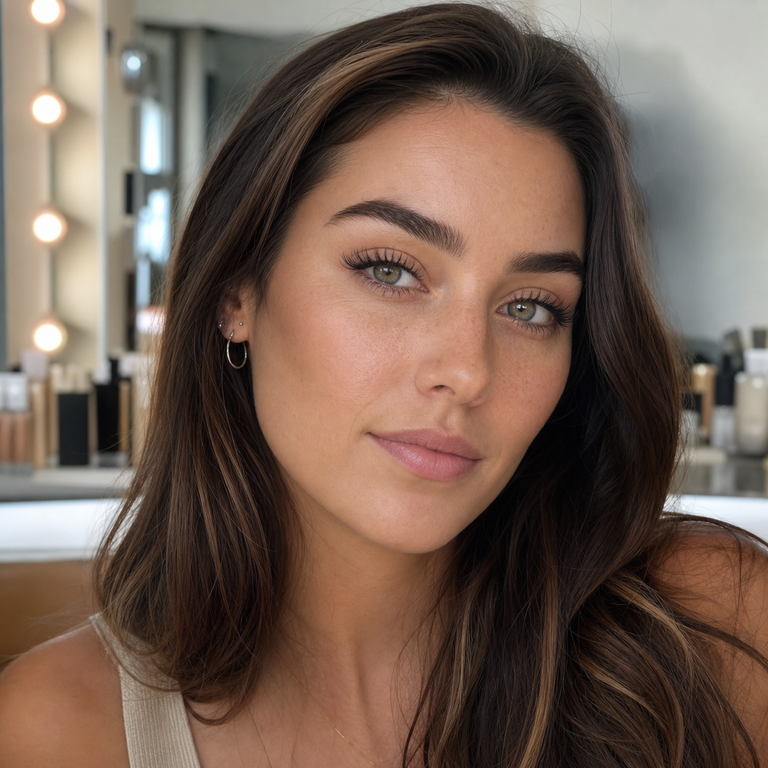
You’re halfway through getting ready: the lashes still look polished from last week’s appointment, the colored contacts are waiting in their case, and your eye makeup is spread across the counter. The combination can look effortless once it’s on. The order of operations is where the routine gets less obvious, especially if you’re heading to a lash fill rather than simply dressing for dinner.
Short answer: you may be able to wear prescribed, properly fitted colored contacts with eyelash extensions during ordinary daily wear if your eyes feel normal and both your eye-care professional and licensed lash technician have no objection. Wearing lenses during the extension appointment may be unwise, however, because your eyes remain closed for an extended period while adhesive, remover, pads, and tape are used close to the ocular surface. Follow the instructions of both professionals. If you develop irritation, redness, pain, discharge, light sensitivity, or any change in vision, remove the lenses and seek appropriate eye-care advice.
The Appointment and Daily Wear Are Two Different Decisions
An eyelash extension appointment isn’t the same environment as putting in contacts after breakfast. During a full set, fill, or removal, the technician works along the lash line while your eyes stay closed. Under-eye pads or tape may be placed near the lower lid. Adhesive is used for application, and a remover may be used when extensions need to come off. None of that proves a given service or adhesive will injure every client. It does mean the appointment brings products, tools, and prolonged eye closure together in a way that ordinary wear does not.
Daily wear after the service is a separate question. Once the appointment is over and your eyes feel normal, the main considerations return to the usual contact-lens basics: a valid prescription, proper fit, clean handling, your prescribed replacement schedule, and a lens-free response to symptoms. Extensions add practical concerns, such as avoiding a tug on the lash line while inserting or removing lenses, but they don’t automatically make colored contacts incompatible.
That distinction prevents two common mistakes. A person who tolerates lenses on normal days shouldn’t assume they belong in the eyes throughout a lash service. At the same time, a technician’s request to arrive without lenses doesn’t necessarily mean the client must stop wearing contacts for the entire life of the extensions. Ask about the appointment policy and the post-service routine separately.
Appointment Versus Daily Wear at a Glance
| Situation | Why it differs | Practical approach |
|---|---|---|
| Full set or fill appointment | Eyes stay closed while adhesive, pads, and tape are used nearby. | Ask in advance whether to remove lenses. Bring a clean case, fresh solution, and glasses if your eye-care professional allows lens removal and reinsertion that day. |
| Extension removal | A remover and additional manipulation may occur close to the lids. | Expect that the technician may prefer lenses out. Follow the service-specific instructions rather than assuming the fill policy applies. |
| First hours after service | Post-service instructions can vary by products and technique. | Follow the technician’s aftercare directions. Don’t insert lenses into eyes that feel irritated or look unusually red. |
| Ordinary daily wear | No active lash procedure is taking place. | Wear only prescribed, fitted lenses as directed, use clean hands, and keep insertion and removal gentle around the lash line. |
| Any day with eye symptoms | Symptoms can signal irritation, inflammation, injury, or infection that needs assessment. | Remove the lenses. Stop eye cosmetics and avoid another lash service until an eye-care professional advises you. |
Ask Both Professionals Before the Lash Appointment
Your eye-care professional and lash technician answer different parts of the question. An optometrist or ophthalmologist can advise on your contact-lens fit, ocular surface, allergies, dry-eye symptoms, and whether removal and same-day reinsertion make sense for you. A licensed lash technician can explain the studio’s lens policy, the expected service time, the placement of pads or tape, and the aftercare required for the products used.
Contact the studio before you arrive rather than waiting until you’re on the table. Ask whether lenses must be removed for a full set, fill, and removal service. Those answers may differ. If removal is requested, bring your glasses and a proper lens kit. Never store lenses in tap water, and don’t improvise with a dry case. The FDA states that decorative lenses require a prescription and warns against purchasing them without one. Its guidance also describes risks from poorly fitted or improperly used lenses, including scratches, infection, and vision problems. Read the FDA guidance on decorative contact lenses and Yilala’s explanation of FDA compliance for colored contacts for the regulatory context.
If you’ve had recent redness, a lid reaction, a stye, discharge, or unexplained discomfort, disclose it before the appointment. Rescheduling can be less disruptive than trying to push through a service near an already unhappy eye. The FDA’s eye cosmetic safety guidance advises stopping an eye cosmetic that causes irritation and avoiding eye cosmetics when an eye infection is present or the surrounding skin is inflamed.
Plan the Contact-Lens Routine Around the Lash Line
Extensions can change the mechanics of a familiar lens routine. Long or dense lashes may brush your fingers, and reaching for the upper lid the way you did before can pull at the extensions. Give yourself time, use a mirror at a comfortable angle, and handle the lens rather than the lashes. If your prescriber has taught you an insertion or removal method, keep that technique instead of copying a social-media shortcut that may not suit your eyes.
Wash and dry your hands before touching a lens. Keep the case, solution bottle, tools, and counter area away from stray fibers and lash debris. Yilala’s guide to handling colored contacts without contamination covers the clean-hand and clean-case habits that should remain unchanged just because extensions are present.
Put lenses in only when the eyes look and feel normal. Don’t use a lens to test whether irritation has passed. If a lens feels wrong, remove it rather than repeatedly blinking and hoping it settles. Follow the wearing time and replacement schedule given by the eye-care professional and lens instructions. Extensions aren’t a reason to sleep, nap, shower, or swim in lenses unless your prescriber has specifically directed an approved use.
When it’s time to remove the contacts, work slowly enough that you don’t pinch an extension between your fingers. Take the lenses out before you become too tired to use careful technique. Clean, disinfect, replace, or discard them according to their approved schedule and your prescriber’s instructions. A neat lash line doesn’t offset poor lens care.
Coordinate Makeup and Removal Without Crowding the Eye
If colored contacts are part of the finished look, insert them according to the sequence recommended by your eye-care professional, usually with clean hands before makeup can transfer to the lens. Then apply cosmetics without pressing into the lash roots or waterline. Your lash technician may also restrict certain products because oils or mechanical rubbing can affect extension retention. Those retention instructions are about the lashes; they don’t replace contact-lens hygiene.
Removal is the point where two routines collide. Lens removal requires clean fingers near the eye, while makeup removal can loosen pigment, fibers, and cleanser around the lids. Taking the lenses out before breaking down eye makeup helps keep remover and debris away from the lens surface. Use the step-by-step eye makeup removal guide for colored-contact wearers, while still following your technician’s direction about extension-friendly cleansing and rubbing.
Be cautious with products positioned as fixes for dryness or redness. Not every drop is meant for use with contact lenses, and a drop that makes the eye look whiter doesn’t identify the cause of redness. Check the label and ask your eye-care professional which formula is appropriate. The guide to eye drops for colored contacts explains why compatibility and timing matter.
Color selection comes after these fit and care decisions. Once you have a prescription and a routine approved for your eyes, Yilala’s colored contacts and makeup guide can help balance lens color, shadow, liner, and lash density. The goal is a coordinated look without making the eye area harder to clean or monitor.
Know When to Remove the Lenses
Remove colored contacts if irritation, redness, pain, discharge, light sensitivity, or a vision change appears. Don’t put the lens back in just to see whether the symptom returns. Stop eye makeup and postpone lash work until you’ve received suitable advice. Pain, sensitivity to light, or altered vision deserves prompt attention because the surface of the eye can’t be evaluated from a mirror or a photo alone.
After removing the lens, follow your eye-care professional’s instructions about whether to save it, discard it, or bring it and its packaging to an appointment. Don’t rinse an uncomfortable eye or lens with tap water. If adhesive, remover, or another chemical gets into the eye during a service, tell the technician immediately and follow urgent product and medical guidance rather than continuing for the sake of finishing the set.
It’s also worth separating lash retention problems from eye symptoms. A few prematurely shed extensions are a cosmetic issue. Burning, marked redness, discharge, pain, light sensitivity, or blurred vision is an eye-health issue. Contact the appropriate clinician rather than asking a beauty appointment to solve it.
What the Eyelash-Extension Evidence Shows, and What It Doesn’t
A 2019 PubMed-indexed literature review on eyelid cosmetic enhancements summarized adverse effects reported in medical journals for procedures including eyelash extensions. The review’s purpose was to make eye-care providers and licensed estheticians aware of possible complications. This is evidence that adverse ocular effects have been reported, not proof that every adhesive, appointment, or client will have a problem.
An earlier retrospective study of patients seen at ophthalmology clinics in Japan described conditions associated with eyelash extensions among people who had already presented with symptoms. Reported mechanisms included exposure to glue or remover and effects involving eyelid-fixing tape. Because it examined clinic cases rather than a representative group of all lash clients, it cannot supply a universal probability of harm for any individual appointment. Its details still support taking products near the ocular surface seriously and responding to symptoms rather than dismissing them.
Neither paper establishes that colored contacts and extensions can never be worn together. They also don’t test a blanket claim that all current adhesives cause the same effects. Formulations, technique, ventilation, client sensitivity, ocular health, and aftercare can differ. The responsible takeaway is narrower: recognize the appointment as a distinct exposure setting, use trained professionals, and have a low threshold for removing lenses and getting eye-care advice when symptoms occur.
A Practical Decision Framework
Start with permission and fit. Colored contacts are medical devices, even when worn only to change appearance, so obtain them with a valid prescription and an eye-care professional’s fitting. Tell that professional that lash extensions are part of your routine, especially if you already deal with dry eye, lid sensitivity, allergies, or trouble handling lenses.
Next, plan the service itself. Confirm the studio’s rule before every type of appointment, not just the first full set. Arrive prepared to remove the lenses if instructed, with glasses and legitimate lens-care supplies. If your eyes aren’t calm on the day, don’t treat the appointment as a test of how much irritation you can tolerate.
Then protect the ordinary routine. Keep hands and cases clean, remove lenses before dissolving eye makeup, avoid pulling the lash line, and honor both the lens schedule and lash aftercare. If you want to browse a color after prescription and fit guidance are settled, the Muse Series colored contact lenses offers a restrained place to compare shades. That link isn’t a promise of compatibility with extensions or with any individual eye.
Finally, let symptoms overrule the beauty plan. Remove the contacts for irritation, redness, pain, discharge, light sensitivity, or vision change. Ask an eye-care professional what to do next, and update the lash technician before another service. A flexible routine is more useful than a universal yes or no.
Frequently Asked Questions
Should I remove colored contacts before an eyelash extension appointment?
Often, removing them is the more cautious plan because the eyes remain closed while adhesive, pads, tape, or remover may be used nearby. Ask both your eye-care professional and licensed lash technician in advance, and follow their instructions for that specific service.
Can I put colored contacts in right after getting lash extensions?
Follow your technician’s aftercare directions and your eye-care professional’s lens guidance. Don’t insert a lens if the eye is irritated, unusually red, painful, watery, light-sensitive, producing discharge, or seeing differently.
Do eyelash extensions damage colored contact lenses?
Extensions don’t automatically damage a lens, but contact with cleanser, adhesive residue, makeup debris, or rough handling may create problems. Keep lens handling clean and separate from lash application or removal products.
Can lash adhesive make my eyes react?
Reactions and ocular adverse effects associated with extension procedures have been reported in medical literature, but that doesn’t mean every adhesive causes harm to every client. Stop the service or wear routine if symptoms develop and seek eye-care advice when appropriate.
Can I wear colored contacts to a lash fill?
Don’t assume a fill is exempt because it’s shorter than a full set. The technician is still working close to closed eyes with adhesive and pads or tape, so confirm the studio’s contact-lens policy before the appointment.
Should colored contacts come out before eye makeup removal?
Yes, removing lenses first can reduce the chance that cleanser, pigment, or loosened debris reaches the lens. Wash and dry your hands, remove the lenses carefully, then clean the eye area in a way that also respects the technician’s extension-care instructions.
What symptoms mean I should stop wearing my contacts?
Remove the lenses for irritation, redness, pain, discharge, light sensitivity, or any change in vision. Don’t reinsert them to test the eye; contact an eye-care professional for advice, with urgent assessment when symptoms are severe or vision is affected.
Are nonprescription colored contacts okay with lash extensions?
No cosmetic combination makes nonprescription lenses an appropriate shortcut. The FDA states that all contact lenses, including decorative lenses, require a prescription; obtain a fitting and follow the prescribing professional’s instructions.