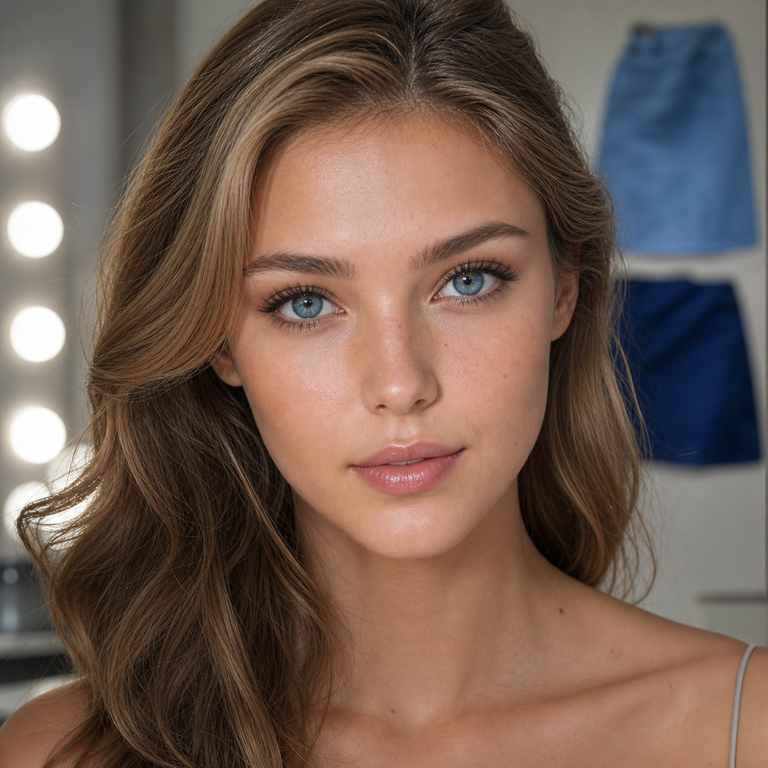
Direct answer: Nova Blue and Thai Blue are tied on the verified specifications that matter for fit screening and catalog selection: both primary listings state HEMA+NVP material, 14.2 mm diameter, 8.6 mm base curve, 38% water content, powers from plano to -4.50, and a six-month replacement period after opening. The defensible difference is identity: Nova Blue is the blue option in model HF190, while Thai Blue is the blue option in model HE1100. I use their separate catalog imagery as a styling reference, not a promise of brightness, opacity, undertone, enlargement, dark-eye coverage, comfort, or any exact on-eye result.
My short version of the choice
When I edit a collection or help frame a lighting plan, I do not try to manufacture a performance winner from two products whose published core specifications match. I first confirm whether the brief calls for the Nova collection or the Thai collection. Then I compare the live listing images beside the wardrobe, makeup, background, camera white balance, and intended crop. If the visual direction still feels equally suitable, I treat the choice as a design preference between HF190 and HE1100, not as evidence that one lens must look stronger or feel better.
That distinction is central to a useful Nova Blue vs Thai Blue colored contacts comparison. Product names and campaign images can establish different creative contexts. They cannot establish a universal result on every iris. Natural eye color, pupil size, lighting direction, exposure, white balance, camera processing, display settings, lens position, and a professionally assessed fit can all influence what a viewer sees. My recommendation is therefore simple: choose the catalog direction you prefer, but let an eye care professional decide whether the prescribed brand and measurements are appropriate for your eyes.
Nova Blue vs Thai Blue colored contacts at a glance
| Comparison point | Nova Blue | Thai Blue |
|---|---|---|
| Live product | Nova Series blue option | Thai Series blue option |
| Model | HF190 | HE1100 |
| Material | HEMA+NVP | HEMA+NVP |
| Diameter | 14.2 mm on the primary listing | 14.2 mm on the primary listing |
| Base curve | 8.6 mm | 8.6 mm |
| Water content | 38% | 38% |
| Listed powers | Plano to -4.50 | Plano to -4.50 |
| Replacement timing | Six months after opening | Six months after opening |
| What the imagery can support | A Nova-specific styling reference | A Thai-specific styling reference |
| What I do not infer | Brightness, opacity, undertone, limbal ring, enlargement, coverage, or comfort | Brightness, opacity, undertone, limbal ring, enlargement, coverage, or comfort |
I take the 14.2 mm figure from the primary specification area on each live listing. That keeps this comparison consistent and prevents descriptive copy elsewhere on a page from outweighing the main product data. Anyone ordering should still confirm the current selection, package labeling, and prescription details before use because a blog comparison does not replace the product page or a contact lens prescription.
What I can compare from the live listings
The most useful product-grounded difference is the model reference. Nova Blue belongs to HF190, and Thai Blue belongs to HE1100. I keep those codes in the selection notes because “blue contacts” alone is not precise enough for a prescription discussion, an order check, or a creative brief. The model code also helps separate these exact lenses from other blue options that may have different dimensions, materials, power ranges, or replacement schedules.
Beyond that identity difference, this blue colored contact lenses comparison reaches a technical tie. Both listings state HEMA+NVP, a 14.2 mm diameter, an 8.6 mm base curve, and 38% water content. Both offer plano and minus powers through -4.50, with the listed steps shown on each product page. Both state six months after opening as the replacement period. Those facts are useful for screening the catalog and preparing questions for an eye care appointment. They are not enough to self-prescribe a lens or predict an individual fit.
For a wider look at the families, I would pair this article with the Nova Series colored contacts guide and the Thai Series colored contacts guide. Those collection-level guides make more sense when the real decision is not simply blue versus blue, but whether the surrounding series and its other color options fit a broader visual plan.
How I read catalog imagery without overclaiming
In catalog editing, images are valuable evidence of art direction. I look at the overall styling language: the makeup palette, background temperature, contrast, crop, catchlights, and how the blue option participates in the complete composition. I may decide that one image belongs more naturally on a cool studio mood board and another belongs in a different fashion story. That is an editorial judgment about an image, not a measured claim about the lens.
I do not label either lens brighter, more opaque, warmer, cooler, more enlarging, more defined at the edge, or better at covering a dark iris unless controlled product evidence supports that exact comparison. The two live pages do not give me a controlled, same-eye, same-light test that would justify those rankings. Catalog photos may be captured with different eyes, illumination, exposure, makeup, and editing. Even when two images appear side by side on the same screen, the viewing conditions are not standardized.
This is also why I never translate a photographed impression into a comfort claim. Comfort is not visible in an image, and matching material, diameter, base curve, and water content do not prove an identical experience for an individual wearer. I have catalog and lighting-selection experience to draw on, but I am not presenting personal wear or testing. I keep the visual discussion within what the images can responsibly do: inspire a styling direction and help a shopper decide which product page to discuss with a professional.
My lighting-based selection workflow
I begin with the intended environment. For daylight portraits, I review the product images next to a neutral reference and avoid assuming that the blue shown under a catalog setup will reproduce outdoors. For warm interior light, I check whether the complete styling direction still fits the wardrobe and skin-tone rendering after the scene’s warmth is considered. For flash or high-contrast beauty work, I pay special attention to reflections and exposure because those can change the photographed appearance of any colored lens.
Next, I build a simple mood board with the two live product pages, the planned background, wardrobe swatches, and makeup references. I do not digitally paste the catalog iris onto a subject and call that a prediction. Instead, I ask which existing catalog story is closer to the production brief. If Nova Blue provides the more useful reference, I select HF190 for further professional fit and prescription review. If Thai Blue provides the more useful reference, I select HE1100 for that review.
Finally, I plan a camera check rather than promising a result. A neutral white-balance target, consistent exposure, unfiltered close-up, and several realistic viewing distances make the final images more informative. The guide on how to make colored contacts look natural in photos explains why lighting and capture choices matter. The important limit remains the same: an organized photo plan can document an on-eye result; it cannot guarantee one in advance.
Are either of these blue contacts for dark eyes?
Both are blue colored options, but the current listings do not provide the controlled comparative data I would need to declare one the better choice among blue contacts for dark eyes. I will not infer dark-eye coverage from a model image or from the collection name. The underlying iris can interact with a colored lens design, and two people with eyes described by the same broad color category may still see different results.
For a dark-eye brief, I use the catalog imagery to define the desired mood and then set expectations around variation. I recommend reviewing the dedicated blue colored contacts for dark eyes guide, showing the exact HF190 or HE1100 listing to the prescribing professional, and evaluating the actual prescribed lens only under safe, realistic conditions. That approach is less dramatic than announcing a coverage champion, but it is more honest and more useful.
I also avoid using “natural” as an absolute score. A natural-looking result depends on the person, scene, viewing distance, makeup, and photographic treatment. What reads as subtle in a softly lit portrait may read differently in direct sun or a close flash image. The right question is not “Which one is universally natural?” It is “Which catalog direction fits my brief, and how does the professionally fitted lens actually appear on my eyes in the environment where I will use it?”
Prescription range and professional fit
Nova Blue and Thai Blue are both presented as prescription blue beauty contacts with plano through -4.50 options. Plano means no vision-correcting power; it does not mean a lens is exempt from prescription and fitting requirements. A power menu also does not tell me whether the lens corrects every prescription need. The listings do not present positive powers, cylinder, axis, or add values, so shoppers who have farsightedness, astigmatism, presbyopia, or powers outside the listed range should not improvise.
Diameter and base curve are product specifications, not a self-fitting formula. The fact that both lenses list 14.2 mm and 8.6 mm makes the published comparison straightforward, but it does not establish that either lens fits a particular eye. I direct readers to eye exams for colored contacts because an eye care professional can assess ocular health, fit, movement, vision, and the complete prescription. Bring the exact brand, model, and current product details to that conversation.
I would never choose a power by copying an eyeglass prescription or by selecting the closest number in a menu. Contact lens prescriptions include lens-specific information, and the FDA says all contact lenses, including decorative lenses, require a prescription. That applies whether the goal is vision correction, fashion, photography, costume styling, or a plano color change.
Six-month replacement does not mean six months of continuous wear
Each primary listing states a six-month period after opening. I read that as a replacement timeline, not permission to wear the lenses continuously, sleep in them, or ignore a professional wear schedule. The opening date should be recorded, and the lenses should be discarded at the prescribed interval or sooner if the product instructions or eye care professional require it. A lens that has spent days in its case is still aging after opening.
For reusable lenses, prevention habits are part of the product decision. The CDC’s contact lens prevention guidance emphasizes healthy wear and care practices. Follow the eye care professional’s instructions and the current product labeling, wash and dry hands before handling lenses, use the recommended fresh disinfecting solution, care for the case, keep lenses away from water, and do not sleep in lenses unless specifically prescribed for that use. Never share lenses.
Matching 38% water content does not establish matching comfort, hydration, oxygen performance, or safe wear duration for a particular person. Those conclusions need more than a product-page percentage. If a lens feels wrong or vision changes, the correct response is not to push through for a shoot. Remove it as directed and contact an eye care professional, especially when symptoms suggest a possible complication.
FDA guidance I apply to both products
Colored and decorative contact lenses are medical devices, not ordinary accessories. The FDA’s page on decorative contact lenses says they require a prescription and warns that obtaining lenses without one or using them incorrectly can cause serious eye damage. It lists risks including corneal abrasion, allergic reactions, decreased vision, infection, and blindness. This safety standard does not change because a lens is plano or selected for beauty rather than correction.
The FDA also advises an eye exam, a prescription that identifies the lens and measurements, proper care, and prompt action for concerning symptoms. Its broader contact lens risks guidance is worth reading before purchase. If there is redness, persistent pain, discharge, decreased or blurred vision, or another significant change, remove the lenses as directed and seek prompt professional care. For Yilala-specific documentation, I would also review the site’s FDA compliance information rather than treating a blog post as regulatory verification.
My comparison therefore ends where professional judgment begins. I can organize the verified listing facts, identify the models, and explain how I use catalog imagery in a creative workflow. I cannot convert those facts into a medical fit, certify a seller or product, or promise safety for an individual. The prescription, source verification, package labeling, hygiene routine, and follow-up care all matter.
My final editor’s verdict
I call this a specification tie and a catalog-direction choice. Choose Nova Blue when the Nova HF190 listing is the visual reference you want to carry into your styling discussion. Choose Thai Blue when the Thai HE1100 listing better frames the creative direction. If neither catalog story clearly wins, do not force a technical ranking: the published material, diameter, base curve, water content, power span, and replacement period match.
The premium decision is the disciplined one. Save the exact product link and model code, compare the imagery with your real wardrobe and lighting plan, expect the on-eye result to vary, obtain a valid lens-specific prescription, and follow professional wear and care instructions. That process gives you a more reliable Nova Blue vs Thai Blue colored contacts decision than unsupported claims about color intensity, dark-eye coverage, enlargement, or comfort.
Frequently asked questions
1. What is the main difference between Nova Blue and Thai Blue?
They are separate blue options in separate Yilala models. Nova Blue is model HF190 in the Nova Series, while Thai Blue is model HE1100 in the Thai Series. Their primary listings otherwise state the same material, diameter, base curve, water content, power range, and replacement period. I treat the catalog identity and imagery as the practical selection difference.
2. Is Nova Blue brighter than Thai Blue?
I cannot support that claim from the live pages. The images are styling references, not a controlled same-eye and same-light comparison. Brightness can also appear different because of iris color, lighting, exposure, white balance, reflections, editing, and display settings. The actual on-eye result varies.
3. Which lens is more opaque or better for dark eyes?
The listings do not provide controlled opacity or dark-iris coverage measurements that establish a winner. I do not infer coverage from catalog photography. Readers comparing blue contacts for dark eyes should use the imagery for inspiration, expect individual variation, and discuss the exact model with an eye care professional.
4. Do Nova Blue and Thai Blue have the same size?
Yes, the primary specification area on each live listing states a 14.2 mm diameter and an 8.6 mm base curve. Those matching numbers make the catalog comparison clear, but they do not prove that either model will fit a particular person. Contact lens fit requires professional assessment.
5. Are both available with prescription power?
Both product pages list plano through -4.50. The displayed options do not cover every vision need, and plano lenses still require a prescription in the United States. Use a current, lens-specific contact lens prescription rather than choosing from an eyeglass prescription or estimating a power.
6. Does the six-month period mean I can wear them every day for six months?
No. It is the listed replacement period after opening, not a continuous-wear authorization or a promise that every wearer can use the same schedule. Follow the product labeling and the wear, cleaning, storage, and replacement instructions provided by the prescribing eye care professional. Record the opening date and never sleep in lenses unless specifically prescribed.
7. Which one is more comfortable?
I do not rank their comfort. Both listings state HEMA+NVP, 38% water content, 14.2 mm diameter, and 8.6 mm base curve, but shared specifications do not guarantee the same individual experience. Comfort cannot be established from catalog images or product copy and should not replace fit assessment or symptom-based professional advice.
8. How should I make the final choice?
First confirm that your prescription and eye care professional support the exact lens. Then compare the Nova HF190 and Thai HE1100 catalog images against your wardrobe, makeup, lighting, background, and camera plan. Choose the styling reference you prefer, verify the current listing and package details, and keep expectations flexible because the on-eye appearance varies.