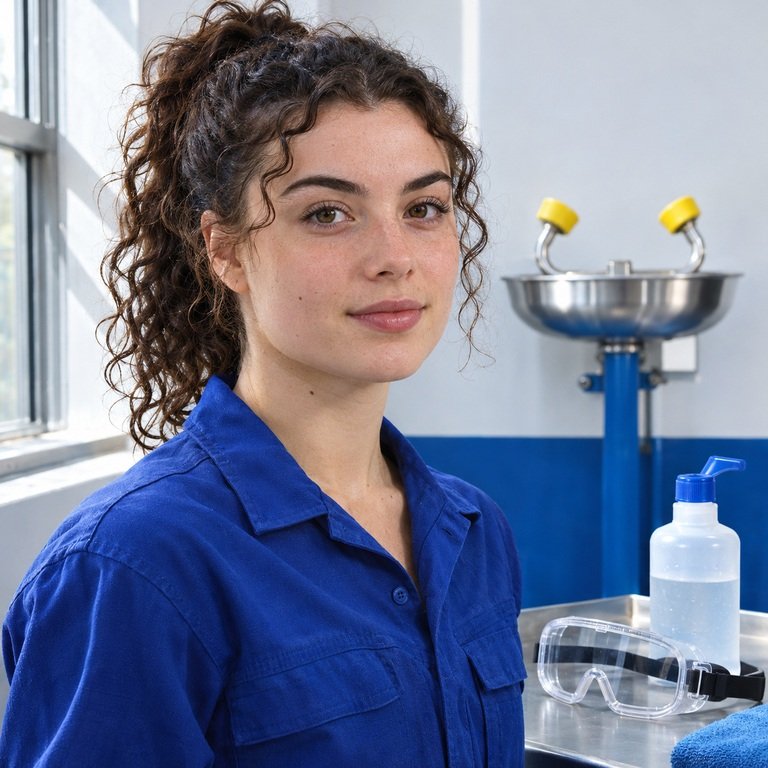
If a chemical has just splashed into your eye while you are wearing colored contacts, start irrigating the eye immediately with plenty of clean, room-temperature running water. Hold the eyelids open, blink, and keep the water flowing across the eye. Remove the contact lens during rinsing only if it comes out promptly and easily. Do not pause flushing to search for a mirror, wash your hands, find contact lens solution, or struggle with a lens that will not move. Immediate irrigation takes priority because every delay leaves the chemical in contact with the eye.
Continue rinsing for at least 15 to 20 minutes unless the product label or an emergency professional directs a longer time. A shower, sink faucet with a gentle stream, or clean container that lets water flow continuously can work. Do not use multipurpose contact lens solution, saline marketed for lenses, eye drops, milk, vinegar, baking soda, or another chemical to rinse or neutralize the exposure. Water is the practical first response when a purpose-built eyewash is not immediately available.
Once irrigation is underway, have someone read the product label and contact Poison Control in the United States at 1-800-222-1222 or use webPOISONCONTROL for product-specific instructions. Call 911 for collapse, seizure, trouble breathing, inability to awaken, or another life-threatening emergency. After flushing, seek urgent medical evaluation for pain, light sensitivity, blurred or changed vision, persistent redness, swelling, discharge, difficulty opening the eye, or any concern involving a corrosive product. This guide cannot identify the degree of injury from symptoms alone.
Colored contacts are prescription medical devices in the United States, including 0.00-power cosmetic lenses, and they require a valid prescription and professional fitting. A fitted lens does not protect the eye from chemicals. If you replace the discarded lens later, use only the exact lens your eye care professional prescribed, as explained in Yilala’s guide to when a contact lens fitting is complete.
What to do during the first 20 minutes
Move away from the source without spreading the chemical. If powder is on the face or eyelids, avoid rubbing it into the eye. If the exposure happened at work, activate the nearest eyewash station and follow the site’s emergency procedure. If it happened at home, use the fastest source of clean, lukewarm or room-temperature running water. Hot water can add discomfort, while a forceful jet can make rinsing harder to tolerate.
- Begin irrigation now. Tilt the head so the affected eye is lower than the other eye when possible. This helps water drain away from the unaffected eye. Let the stream cross the bridge of the nose or flow from the inner corner toward the outer corner rather than aiming a hard jet directly at the cornea.
- Keep the lids open. Chemical irritation can make the eyelids clamp shut. Use clean fingers to hold them apart if necessary, blink repeatedly, and look in different directions so water reaches the exposed surfaces.
- Let the lens come out if it can. A soft colored contact may wash out during irrigation. If it remains in place and can be removed with one quick, gentle attempt while water continues to flow, remove it. If it is stuck, folded, difficult to grasp, or removal would stop the rinse, leave it for the moment and continue flushing.
- Rinse for the full interval. Poison Control advises at least 15 to 20 minutes for substances splashed in the eye. Follow a product label or emergency professional if it specifies more time. Do not shorten the rinse because the burning seems to fade.
- Get product-specific help. Call Poison Control after rinsing has begun, not before. Keep the container, label, Safety Data Sheet, or a photo of the ingredient panel available. Do not delay emergency care while trying to identify every ingredient.
If both eyes are involved, use a shower or eyewash that can rinse both at once. Remove contaminated clothing if it can be done without pulling chemical over the face. A helper can time the rinse, call Poison Control, and bring the product information while the exposed person keeps irrigating.
Contact removal must not interrupt flushing
The common instinct is to remove the colored contact first. That can waste critical time. Finding a clean space, washing and drying hands, locating a mirror, or repeatedly pinching at a painful eye can all postpone the action that dilutes and carries away the chemical. The safer sequence is water first, then lens removal if it is quick and does not stop the water.
Do not rub the eye to loosen a lens. Do not slide a lens around repeatedly, and do not use tweezers, fingernails, a suction tool, or a contact lens applicator on an injured eye. If the lens remains after thorough irrigation, an eye care or emergency professional can assess and remove it with appropriate equipment. Tell the clinician that a colored contact may still be present.
A lens that comes out after a chemical splash should be discarded. Do not rinse it and put it back in, even if it looks unchanged. Soft lenses can absorb or retain substances, and appearance cannot confirm that a lens is suitable for reuse. Switch to glasses after the exposure unless an eye care professional specifically clears contact lens wear. Yilala’s guide to wearing glasses with colored contacts explains why accessible glasses matter, while the guide to keeping tap water away from contact lenses covers routine lens care after the emergency has passed. Emergency eye irrigation is different: the eye must be flushed immediately even though tap water is not appropriate for cleaning or storing lenses.
Use the response that matches the situation
The first move is immediate irrigation across chemical categories, but the label and exposure circumstances still matter. An alkali cleaner, acid, solvent, pesticide, industrial product, cosmetic, laboratory reagent, or unknown liquid may require different follow-up. Do not try to judge seriousness by odor, color, marketing words such as natural, or the amount of initial discomfort.
| Situation | Immediate action | Do not do this | Escalation |
|---|---|---|---|
| Liquid chemical in one or both eyes | Start continuous water irrigation, hold lids open, and rinse at least 15 to 20 minutes | Do not delay for lens removal or use contact lens solution as eyewash | Call Poison Control once flushing starts and arrange urgent care as advised |
| Dry powder on face or eyelids | Move from the source and gently brush loose material away from the eye before or while beginning directed irrigation | Do not rub powder into the eye or blow it toward another person | Use the label or Safety Data Sheet and get professional guidance promptly |
| Lens will not come out | Keep irrigating and blink; report the retained lens to the clinician | Do not dig, scrape, use tools, or stop the rinse for repeated attempts | Seek urgent professional removal and examination |
| Severe symptoms or life-threatening signs | Continue flushing when possible while another person calls for help | Do not drive yourself if vision is impaired or you feel unwell | Call 911 for collapse, seizure, trouble breathing, or inability to awaken |
| Symptoms improve after rinsing | Keep the lens out, preserve product information, and follow exposure guidance | Do not reinsert the lens or assume improvement rules out injury | Seek care for persistent or returning pain, redness, light sensitivity, or vision change |
Never attempt home neutralization. Adding an acid to an alkali or an alkali to an acid can generate heat and create another chemical reaction on the eye. Do not place medication in the eye unless Poison Control, the product label, or a qualified clinician specifically directs it. Routine lubricating drops are not a substitute for copious irrigation, and Yilala’s guide to eye drops and colored contacts is for ordinary use rather than chemical first aid.
When to seek emergency or urgent eye care
Chemical eye exposures deserve prompt professional guidance even when the splash seems small. The product, concentration, pH, temperature, contact time, and area exposed all influence risk, and those details are difficult to assess at home. Poison Control can help determine the next step based on the exact substance and circumstances, but it does not replace 911 for life-threatening signs.
After irrigation, urgent evaluation is warranted for ongoing pain, burning, redness, tearing, swelling, light sensitivity, discharge, a feeling that something remains in the eye, reduced or altered vision, difficulty opening the eye, or a lens that cannot be removed. Seek immediate medical care for known strong acids, alkalis, drain or oven cleaners, wet cement, industrial chemicals, or any product label that directs emergency treatment. If vision is affected, ask someone else to drive or use emergency transportation.
Children, people who cannot cooperate with a full rinse, and anyone exposed while alone may need emergency assistance sooner. If a person wears only one functional eye or has recent eye surgery or an existing eye condition, tell Poison Control and the treating professional. Do not use those factors to diagnose the injury or to decide that rinsing can wait.
Bring the product container or a clear photo of the front label, ingredient panel, and first-aid section if it is safe to do so. For workplace products, bring the Safety Data Sheet. Note the exposure time, when rinsing began, how long irrigation continued, whether one or both eyes were involved, whether the colored contact came out, and what symptoms remain. Do not transport a leaking container in a way that exposes other people.
What to do with the lens, case, and solution afterward
Discard the exposed lens. If the other lens was in place during the same incident, remove it with clean, dry hands after urgent irrigation is complete and discard it too. Do not return either lens to a storage case. Do not use a lens as a specimen unless Poison Control or a clinician specifically asks you to preserve it.
If chemical mist, droplets, or contaminated hands may have reached the lens case, solution bottle tip, or open supplies, set those items aside and replace them rather than guessing whether they are clean. Do not pour solution from one bottle into another, and do not touch or rinse a bottle tip. Yilala has separate routine-care guidance on solution bottle tip contamination, why solution should not be decanted, and why used solution should never be reused.
Do not resume colored contact wear simply because the eye feels calmer later that day. Use glasses and follow the clinician’s instructions. When contact wear is allowed again, open a fresh lens only if it matches the current prescription, approved brand, base curve, diameter, power, replacement schedule, and care system. The broader contact lens solution guide can help with routine care, but no solution can restore a chemically exposed lens.
Reduce the chance of another splash
Wear chemical splash goggles when a label, workplace rule, laboratory protocol, or task risk calls for them. Ordinary prescription glasses and colored contacts are not chemical eye protection. A face shield can add coverage but may not replace properly selected goggles. At work, know the eyewash location before handling chemicals, keep the route clear, and report an empty, blocked, or malfunctioning station.
At home, read the label before opening a product. Point spray nozzles away from the face, use products only in ventilated areas as directed, and never mix cleaners. Put contacts in before applying ordinary cosmetics only when that sequence matches the lens and cosmetic instructions, but choose glasses when using products that create irritating vapor, mist, powder, or splash risk. Store chemicals in their original labeled containers and away from contact lens supplies.
Plan for removal without making lens removal the center of emergency first aid. Keep current glasses available, know the Poison Control number, and make sure family members or coworkers understand that water starts first. If you routinely handle chemicals, ask the safety officer or occupational health team how the site’s eyewash, emergency communication, and medical evaluation procedures work.
Official sources
- Poison Control: Help for poisons splashed in the eye
- MedlinePlus: Eye emergencies
- National Eye Institute: First aid tips for eye injuries
- FDA: Colored and decorative contact lenses require a prescription
Frequently asked questions
Should I remove the colored contact before I rinse my eye?
No. Start rinsing immediately. Remove the lens during irrigation only if it comes out quickly and easily. If removal delays flushing or the lens seems stuck, continue irrigating and tell the treating professional that a lens may remain.
Can I use contact lens solution instead of water?
No. Multipurpose solution and lens saline are not intended to provide the large, continuous flow needed for chemical eye irrigation. Use plenty of clean, room-temperature running water or an eyewash station immediately, then follow product-specific professional advice.
How long should I flush an eye after a chemical splash?
Poison Control advises at least 15 to 20 minutes of irrigation. A product label, Safety Data Sheet, Poison Control specialist, or emergency professional may direct a longer rinse, especially for certain corrosive materials.
What if the colored contact is stuck after rinsing?
Do not use fingernails, tweezers, applicators, or repeated forceful attempts. Continue flushing if the exposure is recent, keep the eye from being rubbed, and seek urgent professional assessment and removal.
Can I clean and wear the exposed colored contact again?
No. Discard a lens involved in a chemical splash. Soaking, rubbing, or disinfecting cannot establish that the lens is free of chemical residue or unchanged, and reinsertion could expose the eye again.
Should I try to neutralize the chemical in my eye?
No. Do not add vinegar, baking soda, another cleaner, or any home remedy. Neutralization can create heat or another reaction. Dilute and remove the substance with continuous water irrigation, then get product-specific guidance.
When should I call Poison Control or 911?
Call Poison Control at 1-800-222-1222 once irrigation has started for product-specific advice. Call 911 for collapse, seizure, trouble breathing, inability to awaken, or another life-threatening emergency. Continue rinsing when possible while help is arranged.
Can I wear a fresh pair when the eye stops hurting?
Do not resume lens wear based only on symptom improvement. Use glasses and follow an eye care professional’s instructions. Pain can decrease while an eye still needs evaluation, and a fresh lens may complicate recovery or conceal worsening symptoms.