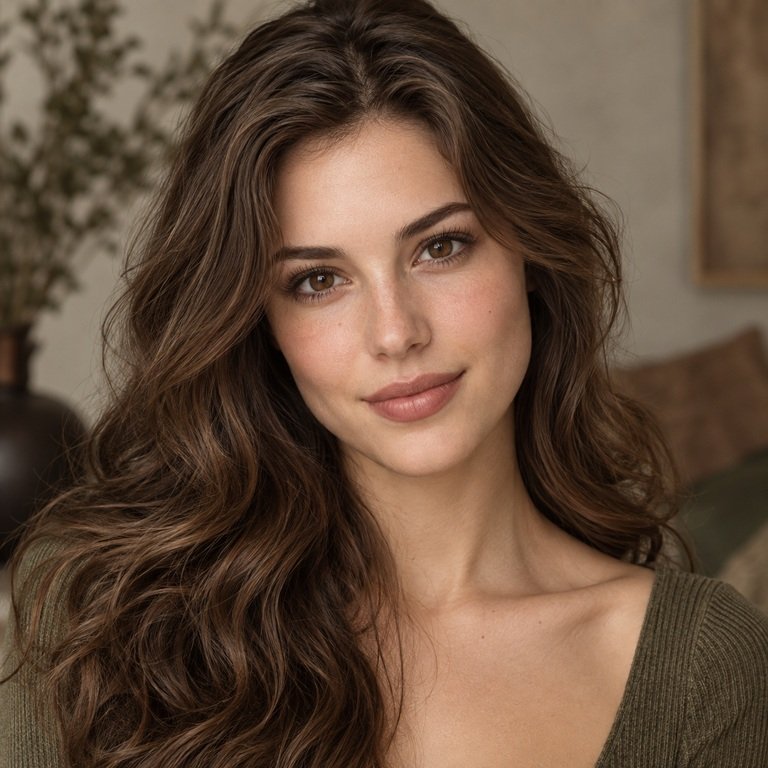
My direct answer is conditional: I shortlist Earl Brown when the styling brief is tailored, polished, and restrained, while I shortlist Olive Brown when the brief is earthy, textural, and relaxed. That is an editorial distinction drawn from the current Yilala catalog, product photography, and styling language. It is not a prediction that either lens will show a particular undertone, opacity, degree of enlargement, dark-eye result, or level of comfort.
Before color enters the decision, US shoppers need a valid contact-lens prescription and a proper fitting by a licensed eye care professional for the exact lens, including a 0.00 plano lens. Colored contacts are regulated medical devices, not over-the-counter cosmetics. A professional must assess the lens on the eye, confirm the prescribed brand and parameters, and provide wear and care directions. If both exact models are professionally approved, I use the catalog story to break the aesthetic tie: Earl Brown, model HE1104, for a refined brown direction; Olive Brown, model HC1419, for an earth-led brown direction.
I am writing as a brand editor, not from a personal wear test. I have not worn or tested either product, and I will not convert product copy, a material name, a water percentage, or styled imagery into claims about wear time, moisture, fit, visibility, or clinical performance. The useful comparison is narrower and more honest: what the current listings verify, how I would build each creative brief, and which questions still belong with the prescriber and the sealed package.
The editorial difference in one line
Earl Brown belongs on my first mood board when the project calls for clean tailoring, controlled neutrals, and a refined catalog identity. Olive Brown belongs on my first mood board when the project starts with natural textures, utility references, warm metals, and an earthy catalog identity. I use those labels to organize a visual direction, not to declare how the lenses will render on an individual iris.
The current Earl page uses refined, sophisticated language, while the Olive page uses an earthy, Mediterranean-inspired frame. Those descriptions open two creative doors into the brown category. They do not prove that Earl is cooler, Olive is warmer, one is lighter, one is darker, or either is more natural. For wider context, I also open Yilala’s natural brown colored contacts shortlist, then return to the live product pages.
Earl Brown vs Olive Brown at a glance
| Comparison point | Earl Brown | Olive Brown | How I use the detail |
|---|---|---|---|
| Series and model | Earl Series, HE1104 | Olive Series, HC1419 | Confirms the exact product identity for the brief and prescription check |
| Current diameter listing | 14.2 mm, with legacy 14.5 traces in image filenames | 14.2 mm | Verify the exact SKU, sealed package, and prescribed diameter before ordering |
| Base curve | 8.6 mm | 8.6 mm | A shared listing number, not proof of identical fit |
| Material and water content | HEMA+NVP; 38% | HEMA+NVP; 38% | Catalog specifications, not comfort or hydration promises |
| Displayed power choices | 0.00 and -1.00 through -4.50 | 0.00 and -1.00 through -4.50 | Use only the exact power and model on a valid prescription |
| Listed replacement point | Six months after opening | Six months after opening | An outside replacement interval, not continuous-wear permission |
| Other current colors | Earl Grey | Olive Blue and Olive Grey | Shows how each brown sits within its own series |
| My catalog-led direction | Tailored, polished, restrained | Earthy, textured, relaxed | Use only after prescription and fit are settled |
The specification overlap does not create a technical winner or make HE1104 and HC1419 interchangeable. A prescription can include the brand or manufacturer, material, power, base curve, and diameter where appropriate. The exact prescribed item matters even when retail summaries look similar.
What the current listings actually establish
The live Earl listing identifies model HE1104 and the colors Earl Brown and Earl Grey. The live Olive listing identifies model HC1419 and the colors Olive Brown, Olive Blue, and Olive Grey. Both currently list HEMA+NVP, an 8.6 mm base curve, 38% water content, and replacement six months after opening. Each selector displays 0.00, then minus powers from -1.00 through -4.50 in quarter-diopter steps. Neither displayed menu includes -0.25, -0.50, or -0.75, and I would not rewrite the menu as every power in a continuous range.
The current summary on each product page says 14.2 mm. Olive also states 14.2 mm in its description. Earl’s current written listing says 14.2 mm, but legacy 14.5 traces remain in image filenames associated with earlier assets. A filename is not package labeling, and it should not overrule the live specification panel. It is still a discrepancy worth disclosing rather than hiding. For Earl, I would ask the seller to confirm the current HE1104 SKU and package label, then have the prescriber verify the exact supplied diameter and product before use.
I take the same package-first approach with Olive even though its current page consistently states 14.2 mm. Before opening either pair, confirm the model, color, power, diameter, base curve, package integrity, and expiration information against the prescription and order record. If a detail conflicts, contact the seller and prescriber.
For an inside-the-series view, Yilala’s Earl Brown and Earl Grey guide and Olive Series guide show how each brown is organized beside its sibling colors. I treat these pages as editorial navigation. The live product listing and sealed label remain the places to verify the item, while the eye care professional determines suitability.
What I do not infer from shared specifications
HEMA+NVP and 38% water content are useful identifiers, but they do not tell me how either lens will feel on a particular eye. I do not describe one as softer, moister, more breathable, easier to wear, or suited to dry eyes based on those two details. Comfort and ocular response are individual clinical questions that require a proper fitting, professional instruction, and follow-up.
A 14.2 mm overall diameter does not reveal the printed color diameter, the visual width of a border, or how large the eye may appear. The pages do not give me controlled opacity data, calibrated color measurements, or standardized on-eye comparisons across different irises. I therefore make no claim that Earl Brown or Olive Brown is more opaque, more enlarging, more defined, subtler, or more effective on dark eyes.
Shade names are catalog labels, not laboratory color values. Lighting, exposure, white balance, retouching, makeup, pupil size, iris color, lens position, and screen calibration can change the perceived result. A photograph can inform campaign styling, but it cannot prove a universal on-eye outcome.
How I build an Earl Brown styling brief
My Earl Brown board begins with structure. I reach for a cream shirt under an espresso blazer, a camel coat with a navy knit, a clean black dress with small gold-colored jewelry, or tortoiseshell accessories against a quiet neutral palette. These combinations support the Earl collection’s refined positioning without pretending to describe the lens itself.
For makeup, I would brief a controlled brown or black-brown line, softly groomed brows, muted rose or neutral beige cheeks, and a lip within the clothing palette. One polished accessory can repeat the tailored language. The aim is a coherent near-face composition.
I shortlist Earl Brown for a dinner portrait, a gallery setting, a softly formal event, a workwear-inspired editorial, or a minimal studio shoot when the creative request is polished rather than rustic. These are styling contexts, not claims about safe wearing duration or the lens’s appearance in those settings. If Earl’s compact Brown-or-Grey family is the main attraction, the choice can also feel simpler at the catalog level: Brown maintains the brown-labeled direction, while Grey opens a separate neutral lane.
When I need makeup-planning context, I may consult Yilala’s colored contacts makeup guide, but I use it as inspiration rather than evidence. Cosmetic color pairings cannot establish lens coverage, undertone, or suitability, and makeup should be kept away from the lens itself according to the wearer’s professional instructions.
How I build an Olive Brown styling brief
My Olive Brown board begins with texture and grounded materials. I think of a camel knit, an olive field jacket, warm denim, linen, rust-colored fabric, woven accessories, matte leather, and bronze-colored hardware. That supports the earthy language of the Olive collection while keeping the claim exactly where it belongs: in the wardrobe and art direction.
For makeup, I would map out restrained taupe, terracotta, soft brown, muted peach, or a carefully placed khaki reference. If the clothing already contains olive, rust, and camel, a quieter face can keep the portrait coherent. I am editing the surrounding look, not predicting a visible Olive Brown undertone.
I shortlist Olive Brown for a linen-heavy daytime story, an autumn wardrobe, a travel-inspired edit, an outdoor celebration, or a relaxed portrait with natural textures. “Relaxed” describes the creative mood, not fit or sensation. The three-color Olive family also offers an easy catalog check: if Brown is not the intended label, Blue and Grey provide visibly different naming directions to review on the same HC1419 page.
Yilala’s Olive Brown versus Olive Grey comparison is useful when the real question is brown-led continuity versus a grey-led brief. I would still return to the live HC1419 page and prescription record because editorial guides can age while product selectors, stock, and packaging change.
How I break a tie without inventing a lens claim
First, I look at the items nearest the face: collar, scarf, earrings, glasses, hair accessories, liner, blush, and lip color. If those details are smooth, tailored, and controlled, Earl Brown gets my first editorial slot. If they are woven, botanical, utility-inspired, or materially textured, Olive Brown gets it. This method compares the whole composition rather than asking a product name to carry more meaning than it can support.
Second, I compare the two mood boards without the lens images. Which already resembles the shopper’s wardrobe or production language? If neither fits, I would not force a choice because both names contain “Brown.” Yilala’s Natural Look Lenses collection can widen the shortlist, although the category label does not promise an undetectable result.
Third, I bring both exact model pages to the eye care appointment. If the professional approves only one model after fitting, the medical decision resolves the tie. If both are appropriately prescribed and fitted, I return to the aesthetic brief. If neither is approved, I choose neither. A color preference never outranks ocular health, prescription accuracy, package verification, or the response observed during a fitting.
Prescription, fitting, and ordering checks for US shoppers
The FDA’s colored and decorative contact lens guidance states that these products are medical devices and require a prescription. The agency also explains that decorative lenses are not one-size-fits-all and that an eye doctor must measure each eye and evaluate its response to contact-lens wear. Plano 0.00 means no refractive correction; it does not remove the US prescription requirement.
The FDA’s contact lens prescription page lists information needed to fill a prescription accurately, including power, material or manufacturer, base curve, and diameter when appropriate. That is why I would not substitute HC1419 for HE1104, or the reverse, merely because their current retail summaries share several specifications.
My ordering sequence is: complete the exam and fitting, obtain the valid prescription, ask about the exact model, resolve Earl’s diameter history, order only the prescribed item through prescription verification, and inspect the sealed delivery before opening it. Yilala’s colored contacts buying guide can organize catalog questions, but it cannot replace professional fitting or US requirements.
Care boundaries for a six-month listing
“Six months after opening” is the replacement wording on both current listings. I read it as an outside calendar interval, not a promise that every pair will remain appropriate for that long, not six months of uninterrupted wear, and not permission to sleep in the lenses. Record the opening date, follow the package labeling and professional schedule, and replace earlier whenever the prescriber or product instructions require it.
The CDC’s decorative contact lens guidance advises using disinfecting solution rather than water or saliva, storing reusable lenses in fresh solution, avoiding solution “top-offs,” not sharing lenses, and replacing the case at least every three months. The National Eye Institute’s contact lens overview likewise emphasizes keeping contacts away from water, cleaning and disinfecting reusable lenses, and following the doctor’s wearing limits.
Wash and fully dry hands before handling lenses. Keep them out of showers, pools, hot tubs, and other water. Use only the care system recommended for the exact prescribed lens, and never improvise with tap water, bottled water, or saliva. Do not mix old solution with fresh solution. Do not share lenses. Keep current backup glasses available in case the contacts need to come out.
Remove the lenses and contact an eye care professional promptly if you develop redness, persistent pain, discharge, light sensitivity, blurred or decreased vision, or another concerning change. Do not test the other color, wait for an event to end, or try to solve a medical symptom through a styling decision.
My final comparison
I choose Earl Brown when the approved lens needs to sit inside a tailored, polished, restrained story. I choose Olive Brown when the approved lens needs to sit inside an earthy, textural, relaxed story. That is the cleanest conditional answer the current catalog supports.
On published headline specifications, neither earns an automatic advantage. Both pages currently list HEMA+NVP, 14.2 mm, an 8.6 mm base curve, 38% water content, displayed choices of 0.00 and -1.00 through -4.50, and replacement six months after opening. The model identities and series contexts differ, and Earl carries a legacy 14.5 trace in image filenames that deserves exact SKU, package, and prescriber verification.
I decide in this order: eye health, exact prescription, professional fit, sealed-package match, then creative direction. After those first four gates, Earl is my tailored edit and Olive my earth-led edit. Neither label supports a claim about final color, coverage, enlargement, dark-eye performance, or comfort.
Frequently asked questions
1. What is the main difference between Earl Brown and Olive Brown?
The current catalog places them in different series and gives them different model numbers: Earl Brown is HE1104, while Olive Brown is HC1419. I use Earl for a tailored, polished styling brief and Olive for an earthy, textured brief. That distinction describes art direction, not a predictable on-eye difference.
2. Do Earl Brown and Olive Brown have the same listed specifications?
Their current headline specifications largely match: HEMA+NVP, 14.2 mm, 8.6 mm base curve, 38% water content, the same displayed power menu, and six months after opening. They remain different models and should not be substituted without the prescriber’s approval.
3. Which diameter is correct for Earl Brown?
The current Earl listing states 14.2 mm, while legacy image filenames contain 14.5 traces. Treat the current panel as the live web statement but do not ignore the conflict. Confirm the exact HE1104 SKU and sealed package, then have the prescriber verify that the supplied lens matches the prescription before use.
4. Which one will look warmer, lighter, or more natural?
I cannot support a universal answer from the current names, pages, or styled photographs. Appearance varies with the iris, pupil, lighting, lens position, camera processing, makeup, and display. I do not infer undertone, lightness, opacity, or naturalness for an individual wearer.
5. Is Olive Brown better for dark brown eyes?
The catalog does not provide enough controlled evidence to make that claim. A dark-eye result depends on the lens pattern, pigment behavior, natural iris, lighting, and fit. Review the current imagery as creative reference only, then discuss the exact lens with the eye care professional.
6. Does the shared 8.6 mm base curve mean both models fit the same?
No. Base curve is one published parameter, not proof of equal fit or interchangeability. A professional fitting assesses the complete lens on each eye, including movement, centration, vision, ocular response, and the exact prescribed product.
7. Can I buy 0.00 Earl Brown or Olive Brown without a prescription in the US?
No. Plano 0.00 colored contacts are still prescription medical devices in the United States. Obtain an eye exam, proper fitting, and valid contact-lens prescription, and buy only through a seller that handles prescription verification.
8. Can I wear either pair continuously for six months?
No. Six months after opening is the listings’ replacement point, not continuous-wear permission. Follow the eye care professional’s daily wear, removal, cleaning, storage, and replacement instructions, never sleep in them unless specifically prescribed, and replace them earlier when directed.