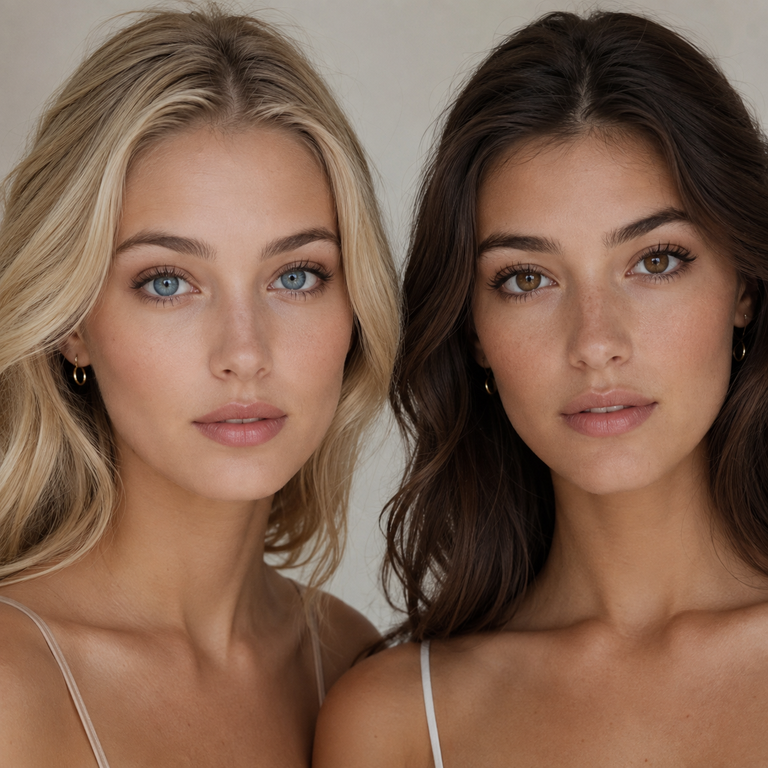
When I put Illusory Blue and Illusory Brown side by side in a catalog edit, I don’t treat the color names as a promise about how either lens will look on someone’s eyes. I treat them as two styling directions within the same product series. Blue gives me a cooler color cue for outfits built around navy, silver, charcoal, icy pink, or crisp white. Brown gives me a warmer cue for camel, bronze, cream, olive, rust, or chocolate. That is a planning distinction, not a wear claim.
The direct answer is simple: shortlist Illusory Blue when your makeup, wardrobe, or character concept needs a blue color reference, and shortlist Illusory Brown when the plan is organized around brown and earth-colored references. Then pause before ordering. Both variants share the listed model and panel specifications, but shared numbers do not guarantee the same fit, comfort, or visual result for you. A current contact lens prescription, professional fitting, and careful review of the live listing come before the color decision.
My Short Version of the Illusory Blue vs Illusory Brown Decision
I start with the part a shopper can actually control: the creative brief. Is the look cool and graphic, or warm and grounded? Does the costume reference call for blue eyes, or is the goal simply to keep the eye area within a brown palette? If the brief explicitly says blue, Illusory Blue is the more direct catalog match. If it calls for brown, Illusory Brown is the more direct match. I would not choose one because a social photo seems to imply a particular level of color change. Screens, editing, white balance, ambient light, and the model’s own eyes can all affect what a product image communicates.
That makes this comparison narrower than many color-contact articles. I am not ranking which shade is stronger, more natural, larger-looking, or easier to wear. The live page does not give me a defensible basis for those claims, and a variant name cannot supply one. I am comparing how I would organize the two options for a US shopper who already understands that colored contacts are medical devices, including plano lenses with no vision correction.
What the Live Illusory Series Listing Actually Confirms
I re-read the live Illusory Series colored contact lenses page before making this comparison. The primary product panel identifies model HE1102 and offers Illusory Blue, Illusory Green, and Illusory Brown. It lists HEMA+NVP material, a 14.2 mm diameter, an 8.6 mm base curve, 38% water content, and powers from 0.00 through -4.50. The panel also says “6 months after opening.” Those are listing facts for the series, not an individual fitting assessment.
The page labels the style “Hybrid Western style” and displays the same selectable power menu for the color choices. It also lists “Certification: FDA.” I read that wording as a product-page statement that should be checked against current packaging, prescription requirements, and seller documentation when ordering. It is not a personal safety assurance, and it does not replace an eye care professional’s evaluation. US shoppers can browse the broader colored contact lenses collection for context, but another product with similar numbers should not be treated as interchangeable without professional guidance.
Diameter, base curve, material, and water content are useful identifiers. They are not a formula that tells me how a lens will sit on every cornea or how it will feel through a wearing period. Two people can have different ocular measurements, tear films, prescriptions, health histories, and care routines. Even for one person, a prior prescription for a different brand does not automatically authorize a swap. The brand, lens design, measurements, and expiration information belong in the prescription and fitting conversation.
I Separate the Color Name From the Expected Result
“Blue” and “Brown” are clear catalog labels, but they are not standardized performance grades. The FDA’s overview of contact lens types explains that contact lenses require a valid prescription and distinguishes decorative plano lenses from conventional corrective lenses. It does not create a universal scale by which every blue or brown cosmetic lens can be predicted across brands or wearers.
So I avoid translating Illusory Blue into claims about coverage, brightness, edge definition, apparent iris size, or a fixed on-eye shade. I apply the same restraint to Illusory Brown. A photographed lens, a lens in its package, and a lens shown in a campaign image are different viewing situations. Natural iris color, pupil size, lighting, exposure, display settings, and image editing can influence a shopper’s impression. None of those variables can be settled by the words Blue or Brown.
This is also why I don’t use “subtle” and “dramatic” as shortcuts here. Those terms sound helpful, yet they can slip into unsupported predictions. Instead, I compare each option to the palette already present in the styling plan. The question becomes, “Which named color belongs in this edit?” rather than, “Which one will transform my eyes in a specific way?” That keeps the decision creative while leaving fitting and individual response to the appropriate professional process.
One Decision Table for the Two Color Directions
| Decision cue | Illusory Blue | Illusory Brown | What I verify before ordering |
|---|---|---|---|
| Palette brief | Use as the blue option for navy, silver, charcoal, white, or cool pink styling plans. | Use as the brown option for camel, bronze, cream, olive, rust, or chocolate styling plans. | Check the live variant name, current images, and current packaging details. |
| Character or event reference | Shortlist when the reference explicitly calls for a blue eye color. | Shortlist when the reference explicitly calls for a brown eye color. | Do not infer a precise photographed result from a costume reference or edited screen image. |
| Makeup planning | Build the makeup board around a blue color cue, then keep other features balanced for the intended setting. | Build the makeup board around a brown color cue, then coordinate with the selected warm or neutral shades. | Test the makeup plan without assuming how the lens itself will render on the eye. |
| Shared series data | Model HE1102; HEMA+NVP; 14.2 mm; BC 8.6 mm; 38% water; 0.00 to -4.50 listed. | Model HE1102; HEMA+NVP; 14.2 mm; BC 8.6 mm; 38% water; 0.00 to -4.50 listed. | Have the exact brand and design professionally fitted; shared specs do not assure equal fit or response. |
| Replacement planning | The listing says 6 months after opening for the series. | Follow the shorter limit among the prescriber’s directions, manufacturer instructions, packaging date, or any condition requiring disposal. | |
How I Build a Styling Board Without Predicting the Lens
For Illusory Blue, I would collect references that share a blue direction: a navy jacket, silver accessories, a cool gray background, blue liner, or a crisp white shirt. This does not mean all of those pieces need to appear together. The board is there to establish a visual family. I also keep a neutral version of the plan, since a single blue reference may be enough for the concept without turning every detail blue.
For Illusory Brown, I would begin with brown, tan, bronze, cream, muted olive, or brick-colored references. Again, this is about the surrounding design, not a claim that the lens will reproduce any exact swatch. Brown can support a minimal portrait concept, a vintage wardrobe, or a character brief that names brown eyes. The catalog label helps place the option in that plan; it cannot replace a real fitting or predict a camera result.
Our colored contacts buying guide can help organize broader purchase questions, while the complete guide to colored contact lenses covers the category in wider terms. I use these as preparation for the fitting conversation, not as substitutes for it.
Prescription and Fitting Come Before Blue or Brown
The FDA says decorative contact lenses are medical devices and that all contact lenses, including decorative lenses, require a prescription. Its decorative contact lens guidance also says an eye doctor should examine the eyes to make sure the lenses fit properly. That applies even if a shopper selects 0.00, often called plano, because zero optical power does not turn a contact lens into ordinary makeup.
A contact lens prescription is not the same thing as an eyeglass prescription. The fitting process accounts for the lens that will rest on the eye, and the prescription should identify the authorized lens details. If your current prescription names another brand or design, ask the prescriber whether HE1102 is appropriate rather than matching only the power, 14.2 mm diameter, and 8.6 mm base curve. Similar printed values do not establish equivalence.
The listed power range from 0.00 to -4.50 also has limits. It does not tell a shopper with astigmatism, farsightedness, different powers in each eye, or needs outside that range to improvise. Select only the power written for each eye in a valid contact lens prescription and only after the exact lens has been addressed by the prescriber. If the required option is absent from the menu, that is a stop sign, not an invitation to choose the nearest number.
I also keep the difference between colored and conventional contacts clear. The comparison in our colored contacts versus regular contacts guide can frame the shopping vocabulary, but both categories remain medical devices. Color is an added design feature; it does not cancel the need for lawful sale, accurate prescription verification, professional follow-up, or clean handling.
Care, Water, and the Six-Month Listing
The words “6 months after opening” describe the replacement statement on the Illusory listing. They should not be read as permission to keep using a lens for six months regardless of wear history, damage, deposits, symptoms, packaging instructions, or professional advice. Calendar duration and daily wearing time are separate ideas. A six-month replacement label does not authorize overnight wear, continuous wear, or any daily schedule your eye care provider has not approved.
The CDC’s current contact lens infection prevention guidance says to wash hands with soap and water, dry them fully before handling lenses, use recommended contact lens solution, avoid mixing fresh and old solution, and keep lenses away from water. It also advises removing lenses before swimming or showering and replacing the case at least every three months. Those habits apply regardless of whether the selected color is Illusory Blue or Illusory Brown.
I would record the opening date on the case label or a phone reminder, but I would never use the reminder to overrule a shorter instruction. Replace a lens sooner if directed by the manufacturer or prescriber, and discard it if it is damaged or otherwise unsuitable under the supplied directions. Never rinse or store contacts in tap water, bottled water, saliva, or homemade liquid. Use fresh, compatible disinfecting solution and follow the prescribed rub, rinse, storage, and wearing routine.
The National Eye Institute advises contact lens users to wash their hands, disinfect lenses, and replace them regularly. It also recommends regular eye care as part of protecting vision. If an eye becomes red, painful, unusually watery, sensitive to light, produces discharge, or vision suddenly changes, remove the lens and contact an eye care professional promptly. Do not put the lens back in merely to see whether the symptom settles.
For more detail on replacement language, our six-month, daily, and monthly contacts guide separates product replacement cycles from day-to-day habits. Our Eye Health & Safety articles are another useful starting point for questions to take to your provider.
My Preorder Check for Model HE1102
First, I confirm that the live page still says model HE1102 and still offers the intended color. Variant menus can change, so I do not rely on a saved screenshot or an old social post. Second, I compare the available power for each eye with the valid prescription exactly as written. Third, I check that the prescriber has approved the brand and design rather than assuming the displayed diameter and base curve are enough.
Next, I read the current packaging and supplied instructions for material, water content, replacement timing, storage, and disposal. The primary panel currently lists HEMA+NVP, 38% water, 14.2 mm, BC 8.6 mm, powers 0.00 to -4.50, and six months after opening. If the packaging, prescription, or current listing conflicts with an older description, I stop and ask the seller or eye care professional for clarification before opening anything.
Finally, I check the practical kit: fresh recommended solution, a clean case, lint-free hand drying, backup glasses, and enough time to handle the lenses without rushing. I do not schedule a first application for the doorway before an event. If the eye care professional provides a shorter wearing period or a staged adaptation schedule, that direction controls. A styling deadline never outranks an eye-health instruction.
Which One Would I Put on the Shortlist?
For a navy, silver, charcoal, icy pink, or explicitly blue character brief, I would put Illusory Blue on the first line of the shortlist. For a camel, bronze, cream, olive, rust, chocolate, or explicitly brown brief, I would put Illusory Brown there. That is the full extent of my color recommendation. I am matching a label to a palette, not predicting what another person’s eyes will look like.
If the styling plan could support either, I would let prescription availability, professional fitting, and the current authorized product details settle the purchase before trying to create a color hierarchy. Illusory Green is also listed in the same series, but it is outside this two-color comparison. Shoppers who want to see additional guides can use the Yilala blog while keeping medical questions with their eye care provider.
The sensible choice is the variant that matches the creative brief and is available exactly as prescribed. If either requirement fails, I would not force the order. Blue versus Brown is a design decision; whether HE1102 is suitable for your eyes is a clinical fitting decision. Keeping those decisions separate makes the shopping process clearer and avoids asking a color name to answer a health question.
Official Sources
- U.S. Food and Drug Administration: Decorative Contact Lenses for Halloween and More
- U.S. Food and Drug Administration: Types of Contact Lenses
- Centers for Disease Control and Prevention: Preventing Eye Infections When Wearing Contacts
- National Eye Institute: Keep Your Eyes Healthy
Frequently Asked Questions
Is Illusory Blue made to different specifications than Illusory Brown?
The live primary panel presents both as color choices within model HE1102 and lists shared series specifications: HEMA+NVP, 14.2 mm diameter, 8.6 mm base curve, 38% water, powers 0.00 to -4.50, and six months after opening. Shared listing data does not assure the same fit, comfort, or appearance for every person.
Which color should I choose for a cool-toned styling plan?
I would shortlist Illusory Blue when the creative brief uses navy, silver, charcoal, white, or another blue-led reference. That is palette coordination only. It does not predict the shade, color change, or photographic result on your eyes.
Which color should I choose for a warm styling plan?
I would shortlist Illusory Brown when the brief uses camel, bronze, cream, olive, rust, or chocolate references. The name makes it the direct brown catalog choice, but it does not establish a particular on-eye effect.
Do I need a prescription for 0.00 Illusory lenses?
Yes. In the United States, decorative contacts require a prescription even when they have 0.00 power. Plano describes the absence of vision correction; it does not remove the need for an eye exam, fitting, valid prescription, and lawful verification.
Can I order using only my eyeglass prescription?
No. An eyeglass prescription does not contain the fitting authorization for a contact lens resting on the eye. Ask an eye care professional for a contact lens exam and a prescription that addresses the exact brand and design.
Does the six-month label mean I can sleep in the lenses?
No. The listing’s six-month statement concerns replacement after opening, not overnight approval or continuous wear. Follow the wearing schedule from your eye care professional and the current manufacturer instructions, and remove lenses before sleep unless specifically directed otherwise.
Can I rinse Illusory Blue or Brown with water?
No. Keep contact lenses away from tap, bottled, pool, shower, and other water. Wash and fully dry your hands, then use fresh recommended disinfecting solution for the prescribed cleaning, rinsing, and storage routine.
What should I do if my eyes become red or painful?
Remove the lenses and contact an eye care professional promptly, especially with ongoing pain, discharge, light sensitivity, unusual tearing, or sudden vision change. Do not reinsert a lens to test whether the symptom has passed.