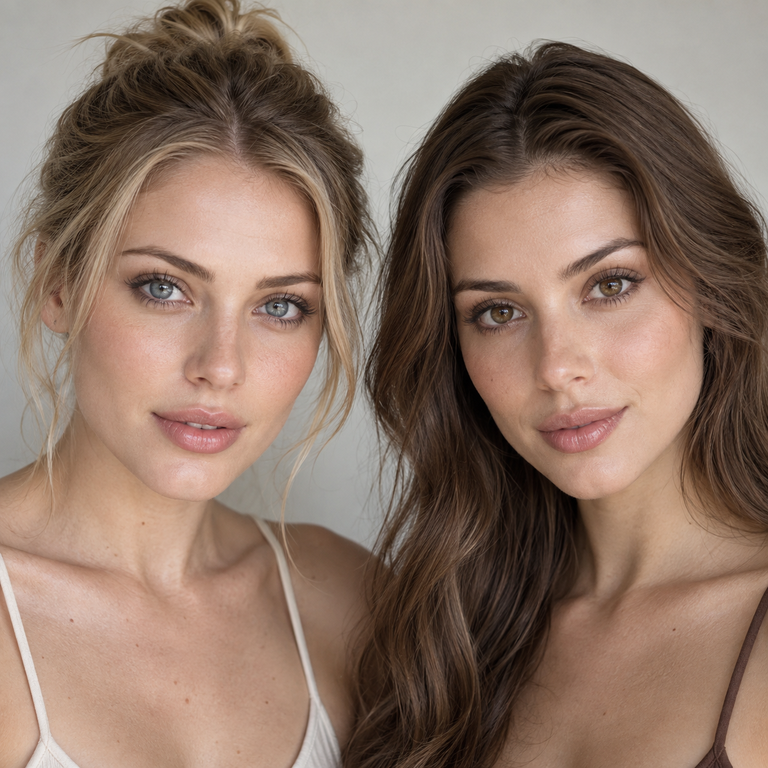
Thai Grey or Thai Brown is the sort of choice that looks simple in a dropdown and becomes more interesting once an outfit is involved. When I compare these two options for our catalog, I do not treat one as the neutral answer and the other as the adventurous answer. I start with the color story around the face: clothing, metal tones, hair color, makeup, setting, and the way the finished look will be photographed.
My direct answer is conditional. I would shortlist Thai Grey when the styling plan is cool, graphic, silver-led, monochrome, or deliberately high-contrast. I would shortlist Thai Brown when the plan is warm, tonal, gold-led, earthy, or built around softly coordinated neutrals. That is a catalog and styling distinction, not a promise about what either lens will look like on a particular eye. The wearer’s natural iris, lighting, camera processing, and individual lens fit can all affect the final appearance.
For a US shopper, color comes after a current contact-lens prescription and professional fitting. The FDA explains that decorative contacts are medical devices, not over-the-counter cosmetics, and says an eye doctor must measure each eye for a proper fit. Plano 0.00 does not remove that requirement. The National Eye Institute’s contact-lens guidance also describes trial lenses as part of checking fit and vision. The comparison below therefore assumes that an eye care professional has prescribed the exact brand and lens parameters. Once that clinical question is settled, Grey versus Brown becomes the creative decision it should be.
The Short Version: Cool Definition or Warm Continuity
Thai Grey is my cooler styling route. I place it beside charcoal, black, crisp white, slate, navy, chrome, and blue-based cosmetics when I want the eye-color choice to belong to a sharper edit. Thai Brown is my warmer route. I place it beside cream, camel, chocolate, rust, olive, bronze, and gold when the composition should read as connected rather than interrupted.
Those descriptions are planning language, not on-eye findings. A color name does not disclose pigment density, iris coverage, perceived size, border design, or the result on light or dark eyes. I do not infer any of those characteristics from “Grey” or “Brown,” and shoppers should not either. The live Thai Series Colored Contact Lenses page is the place to confirm the current selectable variants and listing details before ordering.
| Decision point | Shortlist Thai Grey when… | Shortlist Thai Brown when… |
|---|---|---|
| Wardrobe palette | Black, white, charcoal, navy, slate, or icy colors lead | Cream, camel, chocolate, rust, olive, or warm denim lead |
| Jewelry direction | Silver, chrome, white gold, or gunmetal sets the tone | Yellow gold, bronze, copper, or warm mixed metals sets the tone |
| Makeup map | Taupe, pewter, cool rose, plum, or blue-red is central | Caramel, terracotta, peach, bronze, or brick is central |
| Creative goal | A cooler visual break or a more graphic composition | A warmer transition or a more tonal composition |
| Practical tie-breaker | Choose it if the outfit’s coolest repeated element is near the face | Choose it if the outfit’s warmest repeated element is near the face |
What Is Actually Shared Between Thai Grey and Thai Brown
Both colors sit in the same Thai Series listing, model HE1100. The primary product panel lists HEMA+NVP material, a 14.2 mm diameter, an 8.6 mm base curve, 38% water content, and a six-month period after opening. It lists Thai Grey, Thai Blue, and Thai Brown as color options, with powers from 0.00 through -4.50. Because online listings can change, I would verify the selected color, power, packaging, instructions, and current product information at checkout and again when the order arrives.
Shared specifications are useful for identifying the family, but they do not guarantee equal fit, comfort, or visual result between colors or between wearers. Diameter and base curve are not a complete fitting assessment, and water percentage is not a shortcut to predicting how a lens will feel. An eye care professional evaluates the lens-eye relationship and decides whether the prescribed product is appropriate. If HE1100 is not the brand and model on the prescription, the sensible next step is to ask the prescriber rather than substitute it because the numeric fields appear familiar.
The listed power menu needs the same care. A glasses prescription is not automatically a contact-lens prescription, and two eyes may require different values. The product listing begins at plano and then shows minus powers, but menu availability does not determine what a wearer should select. Prescription details, brand, measurements, and expiration belong to the professional fitting and ordering process.
How I Build a Thai Grey Styling Direction
I begin Thai Grey edits with temperature rather than an imagined eye result. A graphite jacket over a white tee, a navy dress with silver hardware, or a black knit with a cool rose lip gives Grey a clear job in the palette. It repeats a cool note already present instead of asking the lens name to carry the entire concept.
For makeup planning, I would test a small set of nearby colors on paper or in a digital mood board: stone, mushroom taupe, pewter, mauve, plum, and blue-based red. The goal is not to match every element. It is to repeat one cool family in two or three visible places, such as earrings and liner, or a collar and lip color. That repetition makes the choice look intentional in a catalog layout.
Grey can also act as the counterpoint to warmth. A camel coat with silver jewelry, for example, creates a deliberate warm-cool split. I reserve that approach for a more editorial outfit because the contrast needs to be supported elsewhere. With a casual outfit, I usually prefer a simpler bridge, perhaps cool denim, a grey bag, or a charcoal shoe.
Photography changes how a palette is recorded, so I plan the scene before declaring the edit complete. Daylight near a window, warm indoor bulbs, ring lights, and phone-camera processing can shift apparent colors. I compare the outfit and makeup under the lighting likely to be used, but I still do not use a photograph as proof of an individual on-eye outcome. A reference image is a styling prompt, not a fitting or performance test.
If the cool route appeals but the Thai Series is not the only collection under consideration, the Berry Series and Muse Series provide other catalog directions to review with a valid prescription. I compare the actual listings rather than assuming that every option called grey is interchangeable.
How I Build a Thai Brown Styling Direction
For Thai Brown, I start with warmth and material texture. Cream knitwear, tan suede, dark denim, tortoiseshell accessories, olive cotton, and chocolate leather give Brown a connected environment. The lens choice then belongs to the same visual vocabulary as the rest of the outfit.
My makeup mood board usually begins with caramel, bronze, cinnamon, terracotta, peach, or brick. I choose one dominant family and keep the remaining products quieter. A bronze eye, peach cheek, and warm nude lip can work as a coordinated plan, but it should not become a rigid formula. A clean complexion with one warm lip may support the same wardrobe more effectively.
Brown is also useful when the outfit includes several neutrals that need a common thread. Cream, olive, and dark denim are not identical in temperature, yet a warm metal and a brown accessory can connect them. In that type of edit, Thai Brown is the color-direction candidate I investigate first. Again, “brown” alone does not tell me how the lens will render on a wearer, so the recommendation stays conditional.
When I want a neighboring catalog reference, I may review the Earl Series or browse Yilala’s fashion contact lens category. This is not a claim that those designs match Thai Brown. It is a way to compare product families, photography, listed specifications, and available choices without collapsing every brown-labeled option into one category.
Four Tie-Breakers When Both Palettes Work
First, look at the colors closest to the face. A black turtleneck and silver earrings give Grey a stronger reason to be on the shortlist. A camel collar and gold hoops give Brown the clearer role. Shoes matter less than a neckline, scarf, glasses frame, or jewelry because near-face elements occupy the same visual field.
Second, decide whether the lens color should repeat or contrast. Repetition is the easier route: cool elements with Grey, warm elements with Brown. Contrast can be effective, but I add a bridge. If Grey sits against warm clothing, I might repeat silver hardware or a cool liner. If Brown sits inside a mostly cool outfit, I might add tortoiseshell, bronze, or a warm lip.
Third, name the setting. A workplace outfit, dinner look, costume, studio portrait, and daylight street photo solve different design problems. I would keep a daytime palette restrained and let one color family lead. For a staged photo, stronger contrast may make sense. This is an editorial choice only; it never replaces the need to follow the prescribed wearing schedule and product instructions.
Fourth, use the option that creates more combinations with clothing already owned. I would place five likely outfits on a bed or in a photo grid, then mark whether Grey or Brown connects to more of them without requiring a new makeup kit. This simple wardrobe test is more useful than choosing from the variant name in isolation. Shoppers who want a wider starting point can browse the full Yilala shop before returning to the prescribed model.
Prescription, Fit, and Care Stay Outside the Color Debate
US rules do not divide contact lenses into serious prescription products and harmless fashion accessories. The FDA says decorative lenses require a prescription, including lenses used only to change appearance. A valid prescription should identify the brand and correct lens measurements. That is why a 0.00 option is not permission to skip an exam or buy a different product based only on diameter and base curve.
Care is equally specific. The CDC advises wearers to wash and thoroughly dry their hands before handling lenses, avoid sleeping in them unless directed, remove them before swimming or showering, use recommended solution, avoid topping off old solution, and replace the case regularly. The CDC also says to follow the replacement schedule recommended by the eye care provider. “Six months after opening” is the listing’s maximum replacement statement, not an instruction to keep a damaged, contaminated, uncomfortable, or clinically unsuitable lens in service for six months.
For reusable-lens care, the CDC distinguishes cleaning from disinfection and notes that saline does not disinfect contacts. Use the care system and steps prescribed for the lens, fresh solution, and the correct case. Water should not be used to store or rinse contacts. Do not share lenses, and do not transfer them between people for a styling photo.
Remove lenses and contact an eye care professional promptly if there is pain, redness, light sensitivity, sudden blurry vision, discharge, or unusual irritation. The color comparison can wait. Keep backup glasses available, and do not resume lens wear until a clinician says it is appropriate when symptoms occur.
My Final Catalog Call
I choose between Thai Grey and Thai Brown by assigning the lens color a specific job. Grey belongs on my shortlist when the outfit needs a cool repeat, a silver-led accent, or a controlled contrast against warmth. Brown belongs on my shortlist when the outfit needs a warm bridge, a gold-led accent, or continuity across cream, earth, and denim tones.
If that still leaves a tie, I choose the option that coordinates with more near-face pieces already in the wardrobe. I do not break the tie with assumptions about comfort, pigment, coverage, perceived size, or what another person’s photo suggests. Those are not established by the color name, and the final on-eye appearance is individual.
After the prescriber has confirmed HE1100 and the required power, the current Thai Series listing lets shoppers select Thai Grey or Thai Brown. For more editorial comparisons and care-focused reading, visit the Yilala blog and guides and the Eye Health & Safety archive.
Frequently Asked Questions
Should I choose Thai Grey or Thai Brown?
Choose conditionally by palette: shortlist Thai Grey for cool, silver-led, monochrome, or graphic styling, and Thai Brown for warm, gold-led, earthy, or tonal styling. Neither name predicts the final appearance on your eyes.
Do Thai Grey and Thai Brown have the same listed specifications?
They share the HE1100 listing, which currently states HEMA+NVP, 14.2 mm diameter, 8.6 mm base curve, 38% water content, powers from 0.00 to -4.50, and six months after opening. Shared specs do not guarantee equal fit, comfort, or result.
Can I buy 0.00 Thai lenses without a prescription in the US?
No. The FDA treats decorative contacts as prescription medical devices even when they do not correct vision. Get an eye exam, fitting, and a valid prescription for the specific brand and measurements.
Can I convert my glasses prescription to the product power menu?
Do not self-convert it. A contact-lens prescription includes product and fitting information beyond spectacle power. Ask your eye care professional which brand, model, and power to order for each eye.
Does the 14.2 mm diameter mean these lenses will fit me?
No. Diameter and the listed 8.6 mm base curve are product specifications, not proof of fit. An eye care professional must assess your eyes and the prescribed lens on them.
Does six months after opening mean I can wear one pair for six full months?
It is the listing’s replacement period, not a guarantee of usable wear time. Follow your prescriber and package instructions, clean and store lenses correctly, and discard them sooner if directed or if they are damaged or contaminated.
Can I sleep, shower, or swim in Thai Series contacts?
Follow your eye care professional’s directions. CDC guidance says to avoid sleeping in contacts unless directed and to remove lenses before showering or swimming to reduce exposure to germs.
What should I do if my eyes become red or painful?
Remove the lenses promptly and contact an eye care professional. Seek timely care for pain, redness, light sensitivity, sudden blurry vision, discharge, or unusual irritation, and do not restart wear until advised.
Official Sources
- US Food and Drug Administration: Colored and Decorative Contact Lenses, A Prescription Is a Must
- Centers for Disease Control and Prevention: Preventing Eye Infections When Wearing Contacts
- Centers for Disease Control and Prevention: Cleaning, Disinfecting, and Storing Contact Lenses
- National Eye Institute: Contact Lenses