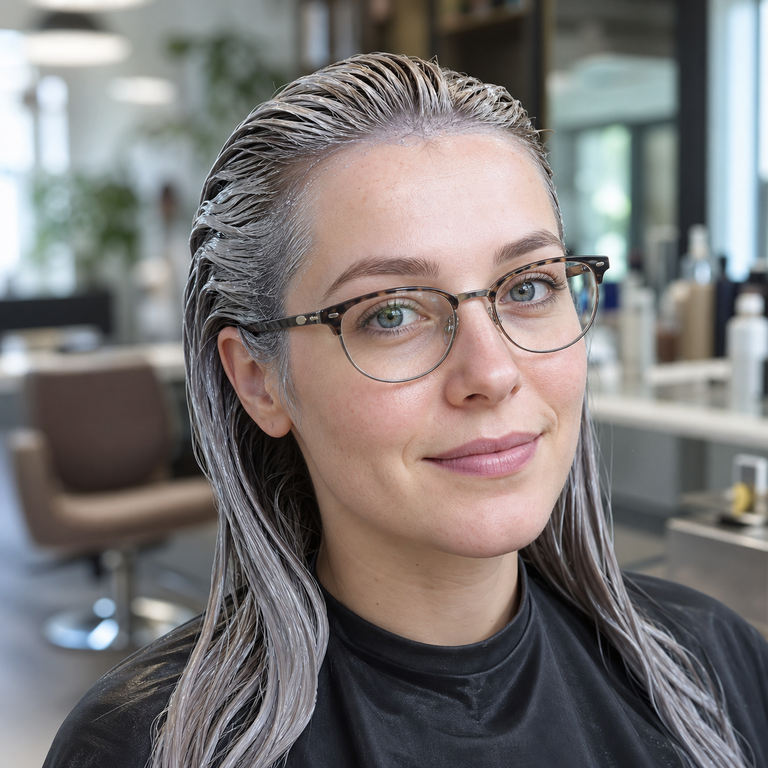
The cape is fastened, the color bowl is mixed, and your stylist is reaching for the first section of hair. Then you remember the colored contacts already in your eyes. At home, the same problem can happen halfway through reading a box-dye leaflet with gloved hands and an old towel around your shoulders.
Direct answer: There is no U.S. rule that specifically bans wearing colored contacts during hair coloring. Still, removing colored or clear contact lenses before dyeing your hair and wearing glasses is the lower-risk practical choice whenever dye, developer, shampoo, spray, wet hands, or rinse water might reach your eyes. Contact lenses do not protect the eye from hair-color chemicals. They can also complicate an exposure because the lens sits directly on the eye and should not be handled casually with contaminated hands.
If you arrive at a salon in lenses, this does not mean the appointment is automatically unsafe or must be canceled. It means you and the stylist should pause before mixing or applying products, consider whether you can remove the lenses with clean, dry hands, and set up a plan that keeps hair products and rinse water away from the eyes. The safest plan is made before gloves, tint brushes, and wet towels enter the picture.
Why contacts add a problem that glasses do not
Hair coloring is usually focused on the scalp and hair shaft, but the work happens close to the face. A stylist may section hair above the forehead, apply color around the temples, emulsify the product near the hairline, then rinse while your head rests in a shampoo bowl. At home, people often bend over a sink or shower, where water can run toward the forehead and eyes.
A contact lens covers part of the cornea. If a splash reaches the eye, the lens is not a shield. The U.S. Food and Drug Administration’s page on contact lens risks explains that contact lenses carry risks such as eye infections and corneal ulcers, especially when wear and care directions are not followed. Add wet fingers, residue from dye or developer, airborne hairspray, or a rushed attempt to remove a lens, and a routine beauty appointment can become a contact-handling problem.
Glasses create distance from the eye and can be taken off without touching the ocular surface. They are not chemical goggles, so they do not make splashes harmless, but they avoid placing a lens on the cornea while products are mixed, applied, and rinsed. If you need prescription vision throughout the appointment, bring glasses that you do not mind protecting from stray color with a clean case or towel when they are temporarily removed.
Colored contacts deserve the same care as clear prescription contacts. Decorative color does not change the basic hygiene rules. If you need a refresher before the appointment, the guide to handling colored contacts without contamination covers clean, dry hands and proper lens handling. That preparation matters because salon sinks, damp counters, color-stained gloves, and shared towels are poor places to improvise.
A practical plan for a salon color appointment
Tell the salon when booking that you wear contacts and may need a minute to switch to glasses before chemical services begin. This is especially useful if you are scheduling lightener, permanent color, a root touch-up around the face, or a service followed by a blowout and finishing spray. You do not need a dramatic announcement. A simple note gives you time and reduces the chance that color is already mixed when you remember.
Pack a small lens kit rather than relying on whatever is in your handbag. Bring your glasses and case, your normal contact lens case if you plan to store reusable lenses, and the care solution recommended for those lenses. Do not use tap water to store or rinse contacts. The CDC’s contact lens prevention guidance tells wearers to avoid water contact and to wash and dry hands before touching lenses.
| Salon stage | What may reach the eye area | Lower-risk action |
|---|---|---|
| Consultation and shade selection | Little or no product is open yet | Confirm the service, then switch from contacts to glasses with clean, dry hands before mixing starts. |
| Mixing and application | Dye, developer, lightener, tint brush drips | Keep lenses out. Ask the stylist to wipe the hairline carefully and tell them promptly if anything runs toward an eye. |
| Processing time | Product can shift under a cap, foil, or heat | Keep hands away from the eyes. Do not adjust or insert lenses while product is on the hair. |
| Shampoo-bowl rinse | Rinse water, shampoo, diluted color | Keep eyes closed, stay positioned in the bowl, and speak up if water tracks toward the face. |
| Cut, blow-dry, and finish | Loose hair, heat-protectant mist, hairspray | Wait until sprays settle and you have access to clean, dry hands before deciding whether to reinsert lenses. |
The table is a planning tool, not a promise that a particular service will be free of splashes. Salon technique, the products used, and your own eye history all matter. If you have active redness, pain, discharge, a recent eye injury, or instructions from an eye-care professional to avoid lenses, wear glasses and follow that professional’s advice.
What changes when you use a home hair-color kit
At home, there is no stylist controlling the brush while you keep your hands still. You may squeeze the bottle, separate hair, wipe the hairline, answer a phone, adjust a shower cap, and clean the bathroom during one session. That increases the number of moments when product residue can move from a glove, fingertip, towel, or faucet handle toward a contact lens.
Read the entire package label before putting on gloves or opening the developer. Follow the manufacturer’s timing, mixing, ventilation, allergy-alert, and emergency directions. Keep the instruction leaflet accessible rather than burying it under stained towels. Set out your glasses first, remove your contacts with clean and fully dry hands, and then arrange the coloring supplies.
Use the gloves supplied with the kit or the glove type directed on the label. Once product is on the gloves, treat them as contaminated. Do not push hair away from your eye, scratch an eyelid, adjust glasses at the bridge, or handle a lens case with those gloves. If you need to touch your face or clean an unexpected drip, stop and deal with your hands and the product according to the label before continuing.
Rinsing is a common weak point. Leaning forward over a sink can send diluted color toward the forehead. Standing under a shower introduces water around the eyes, and contacts should not be exposed to shower water. The Yilala guide on showering in colored contacts explains why taking lenses out before showering is the practical habit. For hair color, choose a rinse position that lets water flow away from your face, keep your eyes closed, and do not rush because the timer has ended.
Patch tests, labels, and the limits of preparation
Many hair-color labels direct users to perform an allergy alert or skin test before each use, often within a specified time window. Follow the exact instructions for your product. Do not substitute a previous trouble-free coloring session for the current label directions, because formulas and individual reactions can change.
A patch test can be useful for identifying some potential reactions under the conditions described by the manufacturer. It does not prove that every part of the full application will be tolerated, and it cannot prevent every allergic or irritant reaction. It also does not address an accidental splash into the eye. Keep those issues separate: the test concerns possible skin or allergy response, while eye protection depends on keeping the product away from the eyes and responding properly if exposure occurs.
The FDA’s hair dye guidance advises following package directions, wearing gloves, not leaving dye on longer than directed, rinsing the scalp well after use, and keeping hair dye away from the eyes. The agency also says never to dye eyebrows or eyelashes. Those uses bring color chemicals too close to the eye and are not an acceptable shortcut for matching brows or lashes to a new hair shade.
This boundary also matters when planning the rest of a beauty appointment. Hair dye is not an eye cosmetic, and eyelash services have their own contact-lens considerations. If your schedule includes both hair and lash work, review the guide on colored contacts and eyelash extensions and give yourself enough time to switch safely between products and services.
If hair dye, developer, or rinse water gets into an eye
Stop the service. Follow the product label’s eye-exposure and emergency instructions and begin rinsing promptly as directed. Do not rub the eye. Get Poison Control or urgent medical guidance, especially if you are unsure what product entered the eye, symptoms are significant, or rinsing does not bring prompt relief. In the United States, Poison Control is available at 1-800-222-1222 and PoisonHelp.org.
Do not use a blanket rule that tells every contact wearer to grab and remove a lens immediately. If your hands or gloves have dye, developer, shampoo, or other residue on them, touching the lens can add contamination and delay rinsing. Continue the urgent response directed by the product label and get real-time guidance on safe lens removal from Poison Control or a medical professional. Tell them that a contact lens is in the affected eye, what product was used, and whether the lens is soft, rigid gas permeable, or another type if you know.
Seek urgent eye care for persistent pain, redness, light sensitivity, discharge, or any vision change. A sensation that something remains in the eye after rinsing also needs professional attention. The FDA hair dye safety checklist says to keep hair dyes away from the eyes and follow the directions on the label and package. Bring the product package or take a clear photo of the ingredient and emergency panels if doing so does not delay care.
Do not try to neutralize the chemical with another household product. Do not put contact lens solution, redness-relief drops, cosmetic eye drops, or homemade mixtures into the eye as a substitute for the label’s emergency directions. The FDA’s eye cosmetic safety guidance reinforces basic precautions such as keeping eye products clean, avoiding use when the eye area is infected or inflamed, and stopping a product that causes irritation.
When can you put colored contacts back in?
Finishing the rinse does not automatically mean your hands, lashes, hairline, and bathroom surfaces are clean enough for lens handling. Dry your hair enough that water is not running toward your eyes. Wash your hands thoroughly, dry them with a clean lint-free towel, and move away from counters or tools that still have color residue. If a finishing spray was used, let the mist clear before handling contacts.
Only consider reinserting lenses if your eyes feel normal and the lenses can be handled according to their instructions. Do not use a lens that was splashed, dropped on a salon or bathroom surface, stored in water, or handled with product residue. Follow the replacement and care directions for that lens. When the status of a reusable lens is uncertain, contact your eye-care professional or the lens manufacturer rather than trying to rescue it with extra solution.
Leave the lenses out and use glasses if you notice burning, unusual tearing, gritty sensation, redness, light sensitivity, blurred vision, or discharge. Eye drops are not a way to cover up a chemical exposure or make a questionable lens wearable. For ordinary questions about compatible lubrication after the appointment, see the guide to eye drops for colored contacts, then follow your eye-care professional’s advice and the labeling for both the drops and lenses.
Planning the finished look without turning contacts into safety gear
Hair color and colored contacts can be coordinated as style choices, but schedule the chemistry and lens handling separately. Decide on the hair shade in glasses, complete the color service, clean up, and assess how your eyes feel. Add contacts later only under normal clean-hand conditions. If makeup is part of the look, the colored contacts and makeup guide explains sequencing without treating lenses as eye protection.
Fit, prescription, legitimate sourcing, and care instructions come before color matching. Colored contacts are medical devices in the United States, including decorative lenses. Yilala’s FDA compliance information provides brand-specific context, but it does not replace an eye exam, prescription requirements, or the instructions supplied with a lens.
After those safety and fit questions are settled, shoppers comparing a softer brown or gray effect with a fresh hair shade can view the Thai Series colored contact lenses. That is a color and appearance decision only. The lenses offer no protection from dye, developer, shampoo, rinse water, or styling products.
Official sources
- FDA: Hair Dyes, including package-use precautions, eye-area restrictions, and advice not to dye eyebrows or eyelashes.
- FDA: Eye Cosmetic Safety, covering hygiene, irritation, and use around inflamed or infected eyes.
- FDA: Contact Lens Risks, explaining that contacts are medical devices with risks that require proper wear and care.
- CDC: Preventing Eye Infections When Wearing Contacts, with guidance on hand hygiene and keeping contacts away from water.
Frequently asked questions
Is it illegal to wear colored contacts while dyeing your hair?
No U.S. rule specifically bans contacts during hair coloring. Removing them before products are opened is still the lower-risk practical choice because contacts do not protect against chemicals and can complicate an accidental eye exposure.
Can I keep clear prescription contacts in at the salon?
Clear lenses present the same basic handling and exposure concerns as colored lenses. Bring prescription glasses and switch before mixing, application, rinsing, or styling spray begins whenever possible.
Do colored contacts protect my eyes from hair dye?
No. A colored contact is a medical device worn on the cornea, not protective eyewear. Keep dye and developer away from the eyes and follow the product label throughout the service.
Should I remove a contact immediately if dye splashes into my eye?
Begin the response directed by the product label promptly, avoid rubbing, and get Poison Control or urgent medical guidance. Do not reach into the eye with contaminated hands or gloves; tell the adviser that a lens is present so they can guide safe next steps.
Can I put my lenses back in right after the shampoo-bowl rinse?
Wait until the service and sprays are finished, your hair is no longer dripping, your hands are washed and fully dry, and your eyes feel normal. Keep the lenses out if there is burning, redness, unusual tearing, gritty sensation, light sensitivity, discharge, or blurred vision.
Does a hair-dye patch test guarantee I will not react?
No. Follow the test instructions on the label, but understand that the result cannot predict or prevent every allergic or irritant reaction. It also does not protect against a splash into the eye.
Can I dye my eyebrows or eyelashes to match my hair?
No. The FDA says never dye eyebrows or eyelashes because an eye injury can result. Use only products specifically labeled for their intended area and keep hair dye away from the eyes.
What symptoms after a splash need urgent eye care?
Persistent pain, redness, light sensitivity, discharge, and any vision change are red flags. Continue to follow emergency guidance and seek urgent evaluation rather than reinserting a lens or masking symptoms with cosmetic drops.
The practical takeaway
Plan the lens decision before color is mixed. Glasses are the sensible default for salon and home coloring because they remove the contact lens from the exposure and handling equation. They are not splash goggles, so careful application, positioning, and label compliance still matter.
If an exposure happens, stop, follow the product’s emergency directions, rinse promptly as directed, avoid rubbing, and get Poison Control or urgent medical guidance. Do not handle a lens with contaminated hands. Once the appointment is over, clean hands, a dry environment, symptom-free eyes, and proper lens care determine whether contacts belong back in your routine that day.